I Let AI Judge My Dinner and It Had Strong Opinions: Lessons From Food-Tracking Apps
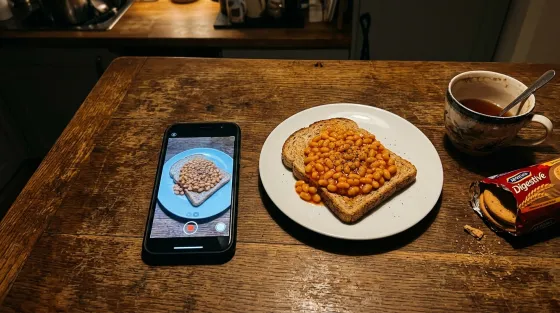
There is a particular kind of humiliation that comes from photographing your sad Tuesday night beans on toast and having an algorithm tell you, with cold digital certainty, that you have consumed 487 calories and should probably consider adding a vegetable. Welcome to the world of AI-powered food-tracking apps, where your phone becomes a nutritionist who never sleeps, never takes a day off, and absolutely never lets you forget about that third biscuit.
I spent several weeks testing food-tracking apps to see whether they could genuinely help me understand my diet better. The short answer: yes, they can. The longer answer involves a complicated relationship with numbers, some genuine surprises about what I was actually eating, and the occasional bout of anxiety that made me want to throw my phone into the sea.
Snap, Judge, Repeat: How AI Food Tracking Works
The premise is deceptively simple. You take a photo of your meal, and artificial intelligence identifies what is on your plate and estimates the calories and nutritional breakdown. Apps like Cal AI, SnapCalorie, and MyFitnessPal have all jumped on this technology, using computer vision to turn your lunch into a spreadsheet.
The market is absolutely enormous. The global nutrition apps sector was worth roughly USD 5 billion in 2023, with projections suggesting it will hit USD 14 billion by 2033. MyFitnessPal alone boasts over 200 million downloads and a database of 18 to 20 million food items. When the company acquired Cal AI in March 2026 (a startup that had racked up 15 million downloads and over $30 million in annual revenue, founded by teenagers no less), it was clear this technology is not going away.
SnapCalorie takes things further by using your phone's depth sensors to estimate portion sizes volumetrically. It sounds like science fiction, but it is genuinely clever stuff, achieving an error rate of around 16 per cent.
What the Numbers Actually Taught Me
Here is what caught me off guard: I thought I had a reasonable handle on my diet. I eat fairly well, or so I told myself with the confidence of someone who has never actually checked. Turns out, confidence and accuracy are not the same thing.
Food tracking revealed blind spots I did not know I had. Portion creep, for one. That "small handful" of nuts? Closer to 300 calories than the 150 I had been casually estimating. The olive oil I was "drizzling" on salads was more of a generous pour, adding hundreds of calories I had never considered. My protein intake was lower than I assumed, while my snacking calories were, shall we say, more significant than I cared to admit.
Research backs this up. A 2022 review of 10 studies covering more than 1,500 participants found that six out of ten studies showed measurable improvements in diet quality among people who tracked their food. A separate 2021 study of 90 healthcare employees found that consistent logging was directly associated with greater weight loss. The act of paying attention, it turns out, actually changes behaviour. Who knew?
The Accuracy Problem (Or: Why AI Struggles With Your Nan's Curry)
Before you hand your entire dietary future over to an algorithm, there is a rather significant caveat. AI food recognition is good, but it is far from perfect.
Independent testing suggests AI calorie tracking hits around 87 per cent accuracy for simple foods (think a banana or a plain chicken breast), but drops to roughly 62 per cent for mixed meals and as low as 50 per cent for homemade or culturally diverse dishes. A University of Sydney study, led by Dr Juliana Chen and published in the journal Nutrients in 2024, evaluated 18 apps after screening 800 and found some alarming discrepancies. Beef pho calories were overestimated by 49 per cent, while pearl milk tea was underestimated by up to 76 per cent.
The same study found that these apps tend to overestimate energy in Western diets by an average of 1,040 kilojoules while underestimating Asian diets by 1,520 kilojoules. There is an obvious cultural bias baked into the training data, and if your diet does not revolve around chicken, rice, and broccoli, you will likely need to do more manual correction.
Manual logging, by comparison, maintains accuracy above 95 per cent. Less glamorous than pointing your camera at a plate, certainly, but considerably more reliable.
The Anxiety No One Warns You About
Here is where things get complicated, and where I suspect many people quietly abandon these apps without ever talking about why.
Tracking every morsel of food creates a peculiar headspace. What starts as curiosity can slowly morph into obsession. I found myself mentally calculating calories before I had even decided what to eat, turning every meal into a maths problem rather than something to enjoy. A spontaneous pub lunch with friends became an exercise in estimation anxiety. Birthday cake triggered a strange guilt that had nothing to do with the cake itself and everything to do with watching a number tick upward on a screen.
The statistics tell a similar story from a different angle: roughly 70 per cent of users abandon food-tracking apps within two weeks if the interface is overly complex. But I would argue that complexity is not the only reason people quit. For some, the constant numerical scrutiny simply becomes too much. There is a fine line between mindful eating and disordered thinking, and these apps can nudge you uncomfortably close to that boundary if you are not careful.
This is not a flaw unique to any single app. It is baked into the very concept of reducing food to data points. Nutrition matters, but food is also culture, comfort, and connection. No app captures the value of your mum's roast dinner in kilojoules.
So, Was It Worth It?
Honestly? Yes, with caveats thick enough to fill a cookbook.
Food-tracking apps taught me things I genuinely did not know about my eating habits. The portion size revelations alone were worth the experiment. Understanding where my protein and fibre were actually coming from (and where they were not) helped me make small, practical changes that stuck. I eat more legumes now. I measure my cooking oil. I have begrudgingly accepted that my previous definition of "a serving of pasta" was, by any reasonable standard, two servings.
But I also learned that I cannot track indefinitely without it affecting my relationship with food. The sweet spot, for me at least, was using these apps as a short-term educational tool rather than a permanent dietary companion. A few weeks of tracking gave me the knowledge I needed. After that, I put the apps away and trusted myself to apply what I had learned.
If you are considering giving one a go, my advice is this: set clear, time-limited goals. Use the data to learn, not to punish yourself. And if you find the numbers are making mealtimes stressful rather than informative, give yourself permission to delete the app and eat your toast in peace.
The AI is impressive. The insights are real. But the best nutritional tool you have is still the ability to listen to your own body, no camera required.
Read the original article at source.





No comments yet. Be the first to share your thoughts.