The 2025 Iberian Blackout: A 'Perfect Storm' of Failures That Left 60 Million in the Dark
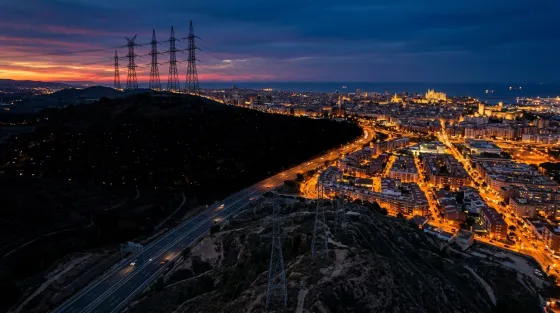
Remember that day last April when the entire Iberian Peninsula just... switched off? When 60 million people across Spain and Portugal suddenly found themselves living like it was 1823? Well, nearly a year on, we finally have answers. And they are, to put it mildly, not flattering for anyone involved.
The Verdict Is In
The ENTSO-E Expert Panel, a crack squad of 49 European energy specialists, published their final report today (20 March 2026) into the blackout of 28 April 2025. Their conclusion? It was not one spectacular cock-up, but rather a magnificent ensemble performance of smaller ones.
ENTSO-E Board Chair Damian Cortinas summed it up rather neatly: 'There is no single cause. It was a perfect storm of multiple factors.' Which, if you have ever read an accident investigation report, is basically code for 'everyone involved has some explaining to do.'
What Actually Happened
At 12:33 CEST on 28 April 2025, something went very wrong on the Iberian grid. Between 12:32 and 12:33, approximately 2.5 GW of combined renewable and thermal generation vanished from the system. To give you a sense of scale, that is roughly the output of two large nuclear power stations disappearing in under 60 seconds.
Voltage on the grid surged from its normal 400 kV up to 435 kV. System frequency, which should sit at a rock-steady 50 Hz with deviations normally below 0.01 Hz, plummeted to 47 Hz. That is not a wobble. That is the electrical equivalent of the floor falling out from under you.
The result? A cascading failure that disconnected 31 GW of load and plunged the entire peninsula into darkness. Most areas went without power for up to 10 hours, with full grid restoration taking a painful 16 hours. Portugal got the lights back on by 00:22 on 29 April; Spain limped across the finish line by 04:00.
At least seven people lost their lives in Spain as a direct result, six in Galicia and one in Madrid from a house fire. This was not merely an inconvenience. It was deadly serious.
So, Was It the Wind Turbines?
Short answer: no. Longer answer: absolutely not, and please stop saying that.
In the weeks after the blackout, a predictable chorus emerged blaming renewable energy. It made for tidy headlines, especially given that renewables were supplying 78% of Iberian generation at the time, with solar alone contributing around 60%. Surely all those panels and turbines were the problem?
The report is unambiguous on this point. Cortinas stated plainly: 'The problem is not renewable energy, but voltage control, regardless of the type.'
Now, were renewables entirely blameless? Not quite. The report found that converter-based renewable systems were operating with fixed power factors, which limited their ability to provide flexible voltage regulation. When voltage spiked, the inverter overvoltage protections on smaller distributed generators did exactly what they were designed to do and disconnected. But the report frames this as a configuration and grid management issue, not a fundamental flaw with renewable technology.
The Real Culprits
Here is where it gets properly embarrassing for the grid operators. The report identified what it called a 'structural problem in the provision and control of ancillary services.' Translation: the basic housekeeping of keeping the grid stable was not being done properly.
Conventional synchronous generators, the big spinning machines that have traditionally provided voltage support, failed to meet their reactive power reference in at least 75% of hourly samples. Three quarters of the time, the conventional plants were not pulling their weight on voltage control. That is not a minor oversight.
Making matters worse, some critical voltage control devices, specifically shunt reactors, required manual operation. In a grid event that unfolds in seconds, having to wait for someone to physically flip a switch is a bit like trying to deploy an airbag by hand during a car crash.
Two oscillation episodes preceded the blackout: one at 0.63 Hz linked to converter-based generation, and a second inter-area oscillation at 0.2 Hz. These were warning signs. Spain's grid operator REE came in for particular criticism for failing to identify the growing risk even as voltage approached critical thresholds, and for not activating frequency reserve protocols promptly enough.
Why the Iberian Peninsula Was Especially Vulnerable
For UK readers wondering whether this could happen here, some context is useful. The Iberian Peninsula has relatively weak electrical interconnections with the rest of Europe, connecting only via France. Think of it as a cul-de-sac on the European power grid rather than a well-connected junction.
This structural isolation meant that when things started going wrong, there was limited backup from neighbouring grids to stabilise the situation. It is a known vulnerability, not a surprise, which makes the lack of preparedness all the more pointed.
Restoration relied on 'black start' capability from Portugal's 138 MW Castelo do Bode hydropower dam and the 990 MW Tapada do Outeiro gas station. Rebuilding a national grid from scratch is a painstaking process, and the fact it took 16 hours tells you just how comprehensively things collapsed.
The Fixes Are Not Rocket Science
Perhaps the most damning element of the entire report is Cortinas's observation that the solutions are well understood: 'This is not about high technology; it has been doable for decades.'
Read that again. The worst power system event in Europe in over two decades, classified at severity levels 2 and 3 on the ICS scale, could have been prevented with engineering practices that have existed for years. Better voltage control protocols, automated rather than manual switching, proper compliance from conventional generators, and more robust monitoring by grid operators.
None of this requires invention. It requires implementation and, frankly, someone paying attention.
What This Means Going Forward
The report makes clear this was not a freak occurrence but a systemic failure. Without reforms, it could happen again. That should worry anyone in Europe, including those of us across the Channel.
The UK grid has its own challenges as we transition to more renewable generation, but our interconnections and grid management differ significantly from Spain's setup. Still, the Iberian blackout is a cautionary tale about what happens when grid modernisation does not keep pace with changes in generation mix.
The lesson is straightforward: renewable energy works perfectly well, but the grid infrastructure, monitoring systems, and operator protocols need to evolve alongside it. That is not an argument against renewables. It is an argument for better engineering and more competent oversight.
Because leaving 60 million people without electricity for the better part of a day is not the kind of thing you get to shrug off with 'lessons will be learned.'
Read the original article at source.



No comments yet. Be the first to share your thoughts.