Why Your Driveway Is Trying To Drown Your House And How To Stop It
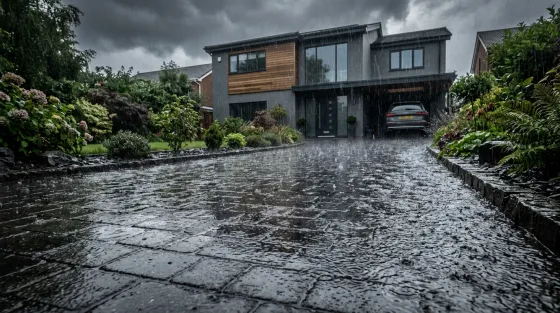
The Great British Paving Obsession
We have a strange relationship with our front gardens in the UK. Once the pride of the street, filled with hydrangeas and the occasional garden gnome, they have largely been sacrificed at the altar of the family car. We love a low maintenance life. We want somewhere to park the SUV without getting our shoes muddy, and we want to do it without ever having to pick up a pair of shears or a trowel. However, this national trend towards sealing up our soil is starting to bite back in a very wet and expensive way.
The British weather is famous for its unpredictability, but one thing we can usually count on is rain. In recent years, that rain has become more intense. Instead of a gentle drizzle, we often face torrential downpours that turn our suburban streets into miniature river rapids. The reason is simple. We have replaced sponges with dinner plates. Every time we lay down a slab of non-porous concrete, we are removing the earth's natural ability to soak up water. Instead of disappearing into the ground, that water has nowhere to go but your front door or the overstretched local sewer system.
The Sobering Statistics of the Concrete Jungle
Recent data reveals a startling shift in how we manage our domestic landscapes. About 54 per cent of front gardens in the UK are now entirely concreted over. This is a significant jump from 1991, when the figure stood at 46 per cent. While an 8 per cent increase might not sound like a national emergency, when you multiply that across millions of homes, you are looking at a massive loss of permeable land.
We are essentially building a giant waterproof skin over our towns and cities. In the early nineties, nearly half of our front gardens still had some form of greenery or soft landscaping. Today, the majority are hard standing. This shift has been driven by the rising cost of parking, the increase in multi-car households, and a general desire to eliminate gardening chores. But as we have found out the hard way, nature does not care about your desire for a pristine, leaf-free driveway. When the clouds open, that water needs a home, and if your garden is a fortress of tarmac, your hallway might be the next best thing.
The Physics of the Flash Flood
To understand why this matters, we have to look at how water moves. In a natural garden, rainwater hits the grass or soil and slowly filters down into the water table. This process is slow and controlled. When you replace that soil with concrete or standard tarmac, the water remains on the surface. This is known as surface runoff.
During a heavy storm, thousands of litres of water can fall on a single street in minutes. If every house has a paved driveway, that water rushes into the gutters and drains all at once. Our Victorian sewer systems were never designed to handle this kind of volume. They become overwhelmed, leading to back-ups and flash flooding. It is a classic case of individual convenience causing a collective catastrophe. You might have a lovely spot for your car, but you are also contributing to the reason the high street is underwater.
The Simple Tweak: Going Permeable
The good news is that you do not have to park on a muddy swamp to save the planet. There is a simple tweak that can drastically reduce your flood risk while keeping your car clean. The answer lies in permeable surfaces. These are materials that look and act like traditional paving but allow water to pass straight through them into the ground below.
Switching to a permeable solution is not just about being a good neighbour. It is about protecting your own property value. A flooded house is a financial nightmare, and insurance companies are becoming increasingly savvy about why certain homes are more at risk than others. If you are planning to renovate your driveway, choosing a water-friendly option is the smartest move you can make for your wallet and your peace of mind.
Your Options for a Flood-Proof Driveway
If you are looking to make the switch, you have several realistic options that suit different budgets and aesthetics. From a UK economy perspective, it is important to choose a solution that offers long-term durability without breaking the bank.
1. Gravel and Shingle
This is the most cost-effective and naturally permeable option available. It is simple to install and provides excellent drainage. As an added bonus, it acts as a fantastic security feature. No one can sneak up to your house quietly on a gravel drive. The downside is that it can be messy, and you might find yourself raking stones back into place after a particularly spirited exit in the car.
2. Permeable Block Paving
This looks almost identical to standard block paving, but the blocks are designed with larger gaps or specific shapes that allow water to drain through the joints. These joints are filled with a specific type of grit rather than sand. It is a premium look that adds genuine kerb appeal to your home while keeping you on the right side of environmental experts.
3. Resin-Bound Surfaces
Not to be confused with resin-bonded surfaces, resin-bound paving is fully permeable. It consists of a mixture of aggregate stones and resin that creates a smooth, solid surface with tiny holes throughout. It is a fantastic modern look and is very hard-wearing, though it does require professional installation which can be pricey.
4. Grass Reinforcement
If you miss the look of a green garden but need to park a car, plastic or concrete reinforcement grids are a brilliant compromise. These grids sit just below or at the surface of the grass, providing the structural strength to support a vehicle without compacting the soil or killing the lawn. It is the best of both worlds: a green front garden that doubles as a parking space.
The Legal Reality: SuDS and Planning Permission
In the UK, there are actually rules about this. Since 2008, the government has implemented Sustainable Drainage Systems (SuDS) regulations. If you want to pave over your front garden using non-permeable materials and the area is larger than five square metres, you generally need planning permission. This was introduced specifically to combat the rising risk of urban flooding.
However, if you use permeable materials, you usually do not need planning permission at all. This is a huge win for the homeowner. By choosing a permeable tweak, you save yourself the hassle of dealing with the local council, the cost of the application fee, and the potential rejection of your plans. It is one of the few times where the environmentally friendly option is also the one with the least amount of red tape.
The Financial Verdict
Is it worth the investment? In a word: yes. While some permeable materials can cost more upfront than a basic slab of concrete, the long-term savings are significant. Consider the cost of home insurance premiums, which can skyrocket after a flood claim. Consider the potential damage to your home's foundations or internal flooring if water pools against the brickwork.
Furthermore, as we move towards a more climate-conscious property market, homes with sustainable features are becoming more attractive to buyers. A driveway that manages its own water runoff is a selling point, not a liability. We have to stop thinking about our driveways as just a place to dump the car and start seeing them as a vital part of our home's defence system.
Final Thoughts
The shift from 46 per cent to 54 per cent of gardens being paved over is a trend we need to reverse, or at least manage more intelligently. You do not need to give up your parking space, but you do need to think about where the water goes when the heavens open. By making the switch to permeable materials, you are protecting your home, helping your community, and staying on the right side of the law. It is a rare win-win-win in the world of home maintenance.
Read the original article at source.




No comments yet. Be the first to share your thoughts.