Going Solo: Why the Lib Dems Want a Truly British Nuclear Button

Sir Ed Davey is usually the man we see falling off paddleboards or hurtling down zip lines to grab a headline. However, his latest policy shift is significantly more explosive than his usual campaign stunts. The Liberal Democrat leader has called for the United Kingdom to develop its own nuclear missiles, effectively ending our decades-long reliance on the United States for our primary deterrent. It is a bold move that signals a major shift in the party's traditionally more cautious approach to defence, and it raises some massive questions about our budget, our sovereignty, and our technical capabilities.
The Rental Agreement: How Trident Actually Works
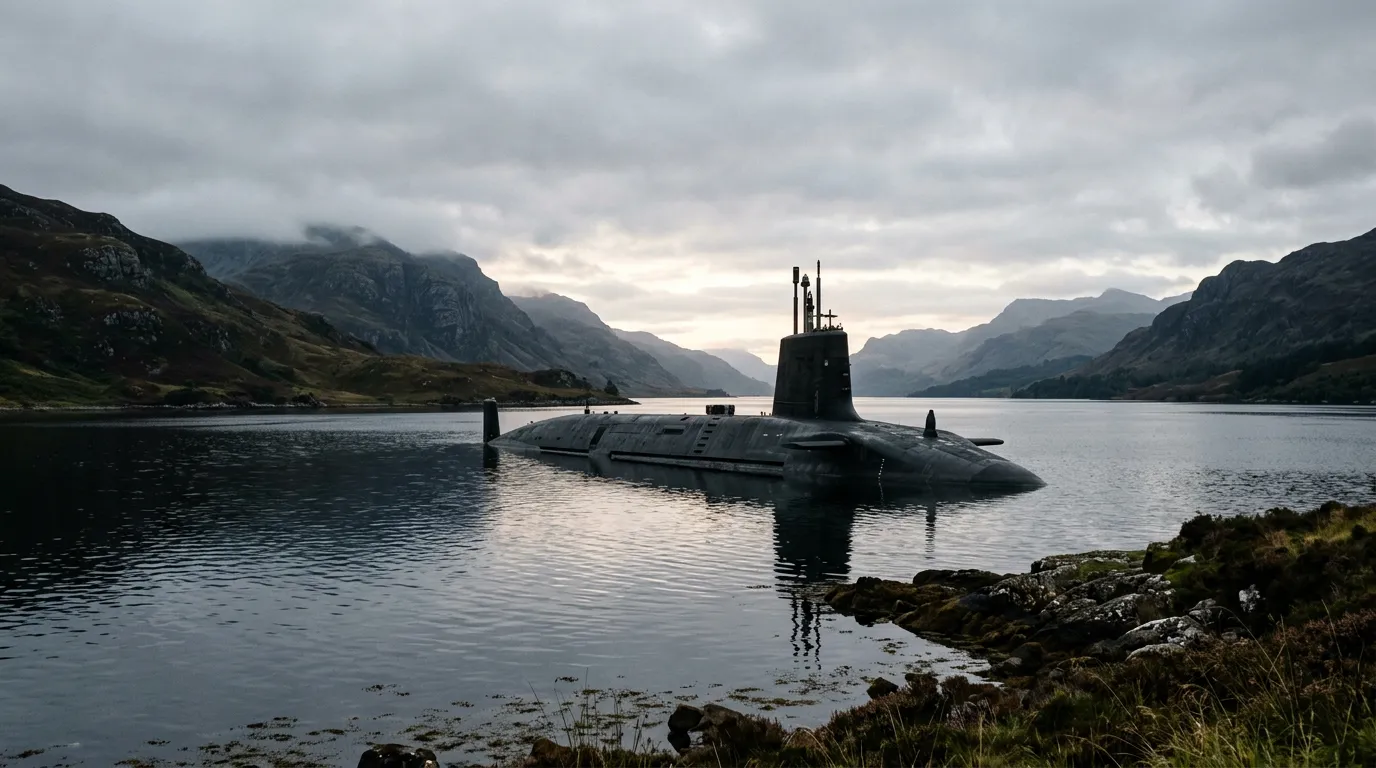
To understand why Sir Ed is making this noise, we first need to look at how the current system works. Most people assume that because we have Vanguard-class submarines and British-made warheads, we own the whole kit and caboodle. That is not actually the case. The delivery systems, the actual Trident II D5 missiles that carry those warheads, are part of a shared pool managed by the United States. We essentially lease them. We do not even own specific missiles; we pick them up from a facility in Kings Bay, Georgia, stick them in our subs, and return them for maintenance later.
It is a bit like having a high-end sports car but being forced to rent the engine from a neighbour who might decide to move house or change the locks on the garage at any moment. While the UK maintains operational independence, meaning we can fire them without a US code or permission, we are completely dependent on American technical support to keep the missiles functional. If the US decided to stop cooperating tomorrow, our nuclear deterrent would have a very short shelf life.
The Trump Factor and Geopolitical Anxiety
Why is this suddenly a Lib Dem talking point? The answer likely lies in the shifting sands of American politics. With the potential return of Donald Trump to the White House, the reliability of the US as a security partner is being questioned across Europe. Trump's historic skepticism towards NATO and his America First rhetoric have sent shivers down the spines of European leaders. If the US pivots away from European security, being tethered to their missile technology looks less like a strategic advantage and more like a massive vulnerability.
Sir Ed Davey is arguing that the UK needs to be masters of its own destiny. In a world that feels increasingly unstable, relying on the political whims of a foreign power for our ultimate insurance policy is a gamble the Lib Dems are no longer willing to take. It is a push for strategic autonomy that mirrors conversations happening in Paris and Berlin, though the UK's nuclear position is unique due to our deep integration with US systems.
The Economic Elephant in the Room
Now, let us talk about the money. The UK economy is hardly in a position to be throwing billions at a new vanity project. Building a sovereign missile system from scratch is not just expensive; it is eye-wateringly, budget-breakingly astronomical. We are talking about a project that would span decades and require tens of billions of pounds in research, development, and infrastructure.
Currently, the UK is already spending a fortune on the new Dreadnought-class submarines and the replacement warhead programme. Adding a bespoke missile development programme to that bill would be a hard sell to a public currently struggling with high energy bills and a creaking NHS. Where exactly does Sir Ed expect the money to come from? The Lib Dems have often been the party of fiscal responsibility and social spending, so pivoting to a policy that requires a massive increase in the defence budget feels like a bit of a head-scratcher for their traditional voter base.
Can We Even Build It?
Beyond the cost, there is the question of technical capability. The UK has not developed a long-range ballistic missile since the Blue Streak project was cancelled in the 1960s. We have spent half a century letting our domestic missile expertise wither away while we leaned on American engineering. Rebuilding that industrial base would be a monumental task. We would need to train a whole new generation of rocket scientists and engineers, build new testing facilities, and navigate the immense hurdles of aerospace manufacturing.
It is not impossible, of course. France manages it with their M51 missiles, which are entirely domestic. But the French have maintained that industry consistently for decades. For the UK to jump back into the game now would be like trying to build a smartphone from scratch after using a rotary phone for fifty years. It is a steep mountain to climb.
The Strategic Reality
There is also the argument that a fully independent system would actually weaken our security in the short term. The transition period would be fraught with risk. If we divert funds from the current Trident programme to build a new British missile, we might end up with a capability gap where neither system is fully reliable. Furthermore, our relationship with the US is built on this very interdependence. Walking away from the Trident agreement could be seen as a snub to our closest ally, potentially damaging intelligence sharing and other areas of military cooperation.
However, the Lib Dems are clearly looking at the long game. They are betting that the world is moving towards a more fractured, multi-polar state where the old alliances cannot be taken for granted. In that context, a truly independent deterrent is the only way to ensure the UK remains a top-tier power with a seat at the table.
The Verdict: Ambition vs. Reality
Is Sir Ed Davey right? From a purely sovereign perspective, yes. It is inherently risky to rely on another nation for your most powerful weapons. If you want a deterrent to be truly credible, you need to be able to maintain it yourself. However, from a practical and economic perspective, this proposal feels like a bit of a pipe dream. The UK economy is under immense pressure, and the sheer scale of the investment required to build a domestic missile programme is hard to justify when we have so many other pressing needs.
We also have to consider the opportunity cost. Would that money be better spent on conventional forces, cyber defence, or even green energy to reduce our reliance on foreign fuel? These are the questions the Lib Dems will need to answer if they want this policy to be taken seriously by the electorate. For now, it feels like a bold statement of intent that lacks a realistic roadmap for delivery. It is witty to suggest we can just build our own nukes and tell the US to keep their missiles, but the reality of the UK's industrial and financial situation suggests we might be stuck with the rental for a good while yet.
Read the original article at source.




No comments yet. Be the first to share your thoughts.