Cash, Chaos and Creatures: Why the Fiver is the Newest Cultural Battleground
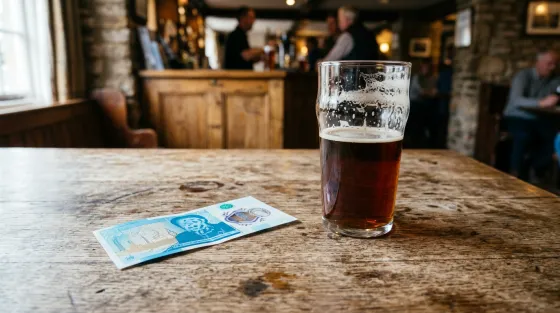
There is something uniquely British about getting absolutely livid over a piece of plastic that most of us only use to buy a meal deal or a pint of milk. We are a nation that prides itself on tradition, yet we find ourselves in the middle of a bizarre tug-of-war over who, or what, should grace our banknotes. On one side, we have the traditionalists clutching their Churchill fivers as if they were the last lifeboats on the Titanic. On the other, we have the RSPCA suggesting that we should perhaps start paying for our groceries with pictures of rats and pigeons. Yes, you read that correctly.
The Churchill Conundrum
For years, Sir Winston Churchill has looked out from the five-pound note with a scowl that perfectly captures the mood of anyone trying to buy a train ticket in 2024. He is the ultimate British icon, a symbol of grit, determination and the ability to look good in a Homburg hat. However, the news that he might eventually be replaced has sent shockwaves through the corridors of Westminster. Politicians are, predictably, furious. For many, removing Churchill is not just a change of stationery; it is an assault on national identity itself.
The argument from the pro-Churchill camp is simple: why fix what is not broken? Churchill represents a turning point in history, and his presence on our currency serves as a daily reminder of national resilience. But as the Bank of England looks to the future, the question arises: who else deserves a spot? Should we keep rotating the same half-dozen historical figures, or is it time for a radical rethink? The backlash suggests that for many, there is no acceptable substitute for the man who led us through the Blitz.
Enter the Rats and Pigeons
Just when you thought the debate could not get any more surreal, the RSPCA has entered the chat. In a move that has left many scratching their heads, the animal welfare charity has suggested that our currency should feature some of the more unloved members of the animal kingdom. Specifically, they are championing rats and pigeons. The logic, apparently, is to foster a sense of empathy and respect for all sentient beings, even the ones that currently spend their time raiding our bins or terrorising tourists in Trafalgar Square.
Imagine the scene: you reach into your pocket to pay for a coffee and pull out a crisp, purple tenner featuring a common brown rat. It is certainly a conversation starter. The RSPCA argues that by placing these animals on our money, we might start to view them as something other than pests. It is a bold strategy, though one wonders if it might have the opposite effect. Given the current state of the UK economy, being associated with a sinking ship or a plague-bearing rodent might be a bit too on the nose for some taxpayers.
The Industrious Beaver
The beaver has also been floated as a potential candidate, and this one actually has some legs. As a symbol of industry, engineering and rewilding, the beaver represents a more positive, forward-thinking version of British wildlife. They are busy, they are constructive and they do not have the same PR baggage as the pigeon. In a world where we are increasingly concerned about the environment, a beaver on a banknote could be seen as a nod to our ecological goals. Plus, they look excellent in profile.
The Digital Elephant in the Room
While we argue over which historical figure or furry friend should be printed on our cash, there is a larger, more digital elephant in the room. Does any of this actually matter? In an era of Apple Pay, contactless cards and banking apps, physical cash is becoming a rarity. Many of us go weeks without touching a physical banknote. The fiver has become the thing you keep in the back of your phone case for emergencies, or the thing you find in a birthday card from a distant aunt.
Perhaps this is why the debate is so heated. As cash becomes less of a utility and more of a cultural artefact, its symbolic value increases. It is no longer just about the five pounds; it is about what that five pounds says about us as a country. If we move away from Churchill, are we moving away from our history? If we embrace the rat, are we embracing a new, more inclusive (if slightly grubbier) future?
A Matter of Value
We also have to consider the UK economy. In a period where inflation has made the five-pound note feel more like a fifty-pence piece, the image on the front is almost irrelevant compared to what it can actually buy. Whether it is a war hero or a woodpigeon, that note is struggling to keep up with the price of a loaf of bread. There is a certain irony in politicians spending hours debating the aesthetics of currency while the actual value of that currency continues to fluctuate wildly. It is like arguing over the wallpaper while the house is being repossessed.
The Verdict: Who Wins?
In the end, the Bank of England has a difficult task. They have to balance the demands of traditionalists who want to keep our history front and centre with the calls for a more modern, diverse and perhaps even animal-friendly representation of Britain. While the RSPCA’s suggestion of rats and pigeons is likely a bit too radical for the general public, it does raise an interesting point about what we value as a society.
My take? We should probably stick to humans for now, if only to avoid the inevitable jokes about our money being literal vermin. However, there is no reason we cannot look beyond the usual suspects. Britain is full of scientists, artists and innovators who have yet to get their moment in the sun (or on the polymer). As for Churchill, he has had a good run. Perhaps it is time he retired to the history books and let someone else deal with the stress of being stuffed into a wallet.
Ultimately, whether you want a beaver, a bird or a Briton on your banknotes, the most important thing is that we have enough of them to get by. In the current climate, that is a much bigger challenge than deciding whose face is on the front.
Read the original article at source.




No comments yet. Be the first to share your thoughts.