Trump Reportedly Eyes Seizing Iran's Oil Island to Reopen Hormuz. What Could Possibly Go Wrong?
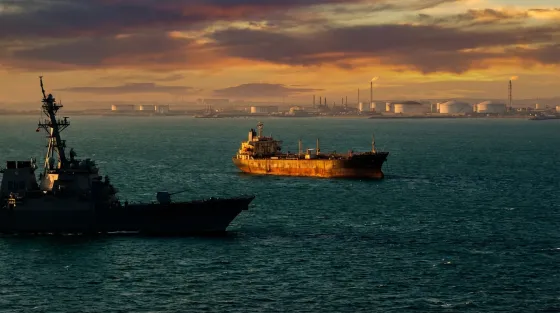
Just when you thought the Middle East situation could not get any spicier, along comes a report that Donald Trump is considering a ground invasion of Kharg Island, Iran's most critical oil export hub, to force open the Strait of Hormuz. Because nothing screams 'measured foreign policy' quite like sending Marines to seize an island within spitting distance of a hostile nation's coastline.
The story, broken by Axios on 20 March 2026, cites senior administration officials who paint a picture of a president whose patience has thoroughly expired. The quote doing the rounds? 'He wants Hormuz open. If he has to take Kharg Island to make it happen, that's going to happen.' Subtle it is not.
How We Got Here
To understand why anyone is seriously floating an amphibious assault on an Iranian island, we need to rewind a few weeks. On 28 February 2026, joint US-Israeli strikes targeted Iran, killing Supreme Leader Khamenei. Iran's response was swift: the Islamic Revolutionary Guard Corps declared the Strait of Hormuz closed from around 4 March, choking one of the world's most vital maritime corridors.
The Strait of Hormuz, 30 miles wide at its narrowest point, carries approximately 20% of global oil and LNG supply. Shutting it down is roughly the equivalent of someone blocking every motorway out of London simultaneously, except instead of delayed commuters you get a global energy crisis. Brent crude blew past $100 a barrel on 8 March for the first time in four years, eventually peaking at a stomach-churning $126 a barrel.
The numbers are bleak. Tanker traffic through the strait has dropped by approximately 70%, with over 150 ships left anchored outside like an enormous floating queue at the post office. There have been 21 confirmed attacks on merchant ships as of 12 March. Iran has also adopted a rather creative 'selective blockade' approach, allowing vessels from Turkey, India, China, and Saudi Arabia to pass whilst blocking US, Israeli, and Western-allied ships. Think of it as a very aggressive guest list at a very dangerous nightclub.
The US Response So Far
Washington has not exactly been twiddling its thumbs. US forces have destroyed 44 Iranian mine-laying vessels and struck more than 90 military targets on Kharg Island on 13 March. Notably, they deliberately avoided hitting oil infrastructure, a move described as a 'shot across the bow.' In plain English: 'We could wreck your entire oil operation, but we are being polite. For now.'
Yet Iran's blockade has held, and that is clearly getting under the president's skin. Enter the Kharg Island invasion concept.
Why Kharg Island?
If you are wondering why one island is worth all this fuss, the numbers tell the story. Kharg Island handles approximately 90% of Iran's crude oil exports. Seizing it would not just reopen trade routes; it would effectively put a boot on Iran's economic windpipe.
The island sits between 15 and 21 miles off the Iranian coast, with sources citing different distances depending on which part of the mainland they are measuring from. That ambiguity is not exactly reassuring when you are planning a military operation. At roughly 33km from the shore, it is close enough for Iran to make any occupying force's life thoroughly miserable with shore-based missiles and fast attack boats.
The 'Suicide Mission' Problem
Not everyone in military circles is raising a glass to this plan. Harrison Mann, a former US Army intelligence analyst, described a Kharg Island seizure as 'close to a suicide mission' during a Democracy Now interview on 17 March. And the arithmetic supports his concern.
The USS Tripoli is heading to the region carrying approximately 2,200 Marines. Sounds formidable until you learn that, according to Mann's analysis, only about 1,200 are actual ground troops among the 5,000 sailors and Marines across the deployed ships. Sending 1,200 ground troops to seize and hold an island within striking distance of a nation that has been preparing for exactly this scenario for decades is, to put it charitably, ambitious. Three Marine units are being deployed in total, signalling that the administration is at least preparing for the option, even if no final decision has been taken.
The Energy Fallout and Why the UK Should Care
This crisis is far from a purely American concern. The energy disruption from the Hormuz closure has been described as the largest since the 1970s oil crisis, and the UK is feeling it.
Britain is among seven allies backing a potential coalition to reopen the strait, although none have yet committed naval vessels. The UK Maritime Trade Operations Centre has been tracking attacks on shipping, and British consumers are already enduring the consequences at the pump and on their energy bills. With the cost of living crisis still raw in the national memory, another energy price shock is about the last thing UK households need.
The International Energy Agency has agreed to release 400 million barrels from emergency reserves, which should provide some cushion. But it is a sticking plaster on what could become a very deep wound if the strait remains blocked. US petrol prices have already jumped from around $2.90 to $3.84 per gallon, and British drivers can expect proportional pain layered on top of already elevated domestic energy costs.
Are There Less Explosive Options?
It is worth noting that alternatives to a full-scale amphibious invasion do exist. Military analysts have suggested that after further degrading Iran's coastal defences, the US could deploy destroyers and aircraft to escort tankers through the strait. This approach carries significantly less risk of escalation and avoids the thorny question of holding hostile territory indefinitely with a force that most experts consider far too small for the job.
Seven US allies have expressed support for a coalition effort, though the conspicuous absence of committed warships suggests that enthusiasm for a shooting war in the Persian Gulf is, shall we say, measured.
The Political Theatre
Trump himself has been characteristically coy, publicly stating he was 'not putting troops anywhere' before adding 'if I were, I certainly wouldn't tell you.' Meanwhile, US lawmaker Pete Sessions has offered the rather creative argument that Marines on Kharg Island would not constitute 'boots on the ground.' One imagines the Marines' actual boots might beg to differ.
What Happens Next?
As of 20 March, no final decision on a ground invasion has been made. But the deployment of Marine units, the sustained air campaign against Iranian positions, and the increasingly hawkish language from senior officials all suggest this is more than idle sabre-rattling.
Reopening the Strait of Hormuz through military force is technically possible. Whether doing so by seizing an island a stone's throw from the Iranian mainland is wise, proportionate, or even militarily feasible with the forces currently available remains another question entirely.
For British consumers already grimacing at the cost of filling the car, the hope is that cooler heads prevail before this escalates further. History has a rather uncomfortable habit of showing that military operations billed as quick and decisive rarely stay that way.
Read the original article at source.





No comments yet. Be the first to share your thoughts.