Trump Draws Pearl Harbour Comparison While Defending Iran Strike Decision to Japanese PM
A Diplomatic Moment That Raised Eyebrows
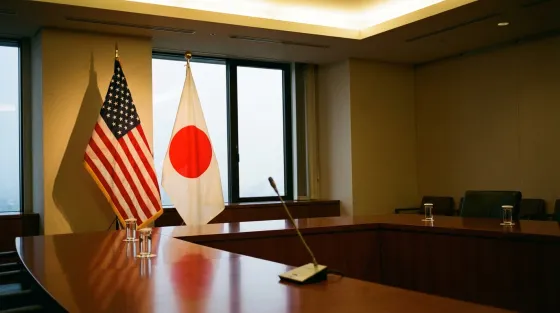
During a high-profile meeting with Japanese Prime Minister Shigeru Ishiba, US President Donald Trump faced pointed questions about why he failed to inform allied nations before launching military strikes against Iran. His response drew an immediate and controversial comparison to the attack on Pearl Harbour, a moment that left observers and diplomats reaching for context.
The exchange, captured on camera, has quickly become one of the most talked-about diplomatic incidents of the year. It raises important questions about the state of US foreign policy, allied trust, and the broader implications of unilateral military action.
What Happened in the Meeting
When pressed by reporters on why allies were kept in the dark ahead of the Iran strikes, Trump opted for a historical analogy rather than a straightforward policy explanation. He compared the US military operation against Iran to the 1941 Japanese attack on Pearl Harbour, an event that drew America into the Second World War.
The comparison was striking for several reasons. Most notably, it was made directly in front of the Japanese Prime Minister, whose country carried out that very attack over 80 years ago. The remark appeared to catch those present off guard, and the diplomatic awkwardness was palpable.
Why This Matters for the UK and Allied Nations
For the United Kingdom and other NATO allies, the episode underscores a growing concern: the US appears increasingly willing to act alone on major military decisions without consulting its traditional partners. This is not merely a question of protocol. Allied coordination is a cornerstone of collective security, and bypassing it can have real consequences.
Key concerns include:
- Erosion of trust between longstanding allies who rely on shared intelligence and coordinated strategy
- The risk that unilateral strikes could escalate tensions in already volatile regions, with knock-on effects for European and global security
- Questions over whether the so-called special relationship between the US and UK still carries meaningful weight in military planning
From a UK perspective, any escalation in the Middle East has direct implications. Energy prices, trade routes, and regional stability all factor into Britain's economic outlook, which remains under pressure.
The Pearl Harbour Analogy Under Scrutiny
Historians and political analysts have been quick to challenge the comparison. Pearl Harbour was a surprise attack by a foreign power against the United States. The Iran strikes were an offensive operation initiated by the US itself. The two scenarios share little in common strategically or morally, and using one to justify the other has been widely criticised as misleading at best.
There is also the matter of diplomatic sensitivity. Making such a reference in front of the Japanese head of state was seen by many commentators as, at minimum, a significant lapse in judgement. Japan and the US have spent decades building a strong post-war alliance, and moments like these risk undermining that progress.
What Comes Next
The fallout from this exchange is likely to continue. Allied nations will be watching closely to see whether the US offers any further explanation or reassurance regarding its approach to coalition involvement in future operations. For the UK government, this is a reminder that relying on American strategic consistency is an increasingly uncertain proposition.
Whether this moment proves to be a passing headline or a genuine turning point in allied relations remains to be seen. What is clear, however, is that the diplomatic landscape is shifting, and nations like Britain must be prepared to adapt accordingly.
Read the original article at source.





No comments yet. Be the first to share your thoughts.