The Razer Boomslang 20th Anniversary: A Gorgeous, Overpriced Relic for the Dedicated Nerd
The Legend of the Snake
Cast your mind back to 1999. It was a time of baggy jeans, questionable hair gel, and the screeching symphony of dial-up modems. In the gaming world, a company called Razer arrived on the scene with a device that looked less like a peripheral and more like something recovered from a Roswell crash site. That device was the Boomslang. It was weird, it was wide, and it promised to turn you into a Quake god. Fast forward twenty years, and Razer decided to celebrate that legacy with a limited edition 20th Anniversary model. But is this a triumphant return or just a very expensive trip down memory lane?
A Design Only a Mother (or a Pro Gamer) Could Love
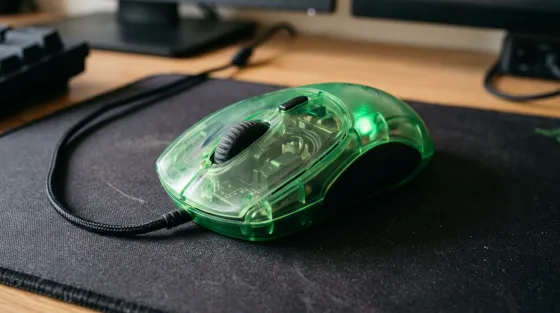
The Boomslang was never what you would call ergonomic in the traditional sense. While modern mice are sculpted to fit the human hand like a supportive glove, the Boomslang looks like a flattened mechanical beetle. It is incredibly wide at the front and tapers off into a slim tail. For the 20th Anniversary edition, Razer ditched the plastic of the original and went full luxury. We are talking about a heavy, cold-to-the-touch metal chassis that feels like it could survive a nuclear blast or at least a very frustrated toss across the room after a losing streak.
The buttons are massive. They take up nearly half the surface area of the mouse, ensuring that even if you have the coordination of a caffeinated squirrel, you will probably hit the left click. However, the shape is a polarising choice. If you use a palm grip, you are going to have a bad time. This mouse was designed for the claw grip aficionados of the late nineties, people who wanted to flick their wrists with surgical precision. In the modern era, it feels like trying to drive a vintage sports car without power steering. It is mechanical, raw, and slightly exhausting.
The Specs: Modern Tech in an Antique Shell
Underneath that heavy metal exterior, Razer did actually put some modern internals. You get a high-end optical sensor that tracks beautifully. It is a far cry from the original ball-mouse tech that required you to clean out skin cells and dust every three hours just to keep the cursor moving straight. It is fast, it is accurate, and it works on almost any surface. But here is the rub: nobody is actually going to use this for competitive gaming in 2024. It is too heavy, the shape is too eccentric, and honestly, it is too precious.
The scroll wheel is still there, tucked away in that familiar central groove, and it feels tactile enough. The cable is braided, as you would expect for something at this price point. But despite the modern sensor, the mouse feels like a museum piece that has been given a fresh engine. It is capable of high performance, but the chassis is holding it back from being truly competitive against the light-as-air wireless mice we see today.
The Literal Joke of a Price Tag
Let us talk about the elephant in the room: the price. When this mouse launched, the cost was described by many as a literal joke. In a UK economy where we are all watching our pennies and wondering if we can afford the good biscuits this week, spending hundreds of pounds on a wired mouse feels like a fever dream. You are not paying for a tool; you are paying for a piece of history. You are paying for the green glowing logo, the limited edition number engraved on the bottom, and the fancy wooden box it comes in.
For the average gamer looking to improve their K/D ratio in Call of Duty, this is a terrible investment. You could buy a top-tier wireless mouse, a decent mechanical keyboard, and still have enough left over for a cheeky Nando's for the price of this collector's item. But collectors do not care about value for money in the traditional sense. They care about the 'clout' and the nostalgia of owning one of only 2,000 units ever made.
The Verdict: For the Mantelpiece, Not the Mousemat
The Razer Boomslang 20th Anniversary edition is a beautiful, ridiculous, and completely unnecessary object. It is a love letter to the early days of PC gaming when things were experimental and slightly mad. As a daily driver, it is a nightmare. It is heavy, the shape will give you hand cramps within twenty minutes, and the wire feels like a tether to a past we have mostly moved on from.
However, as a piece of tech art, it is stunning. The metal construction gives it a premium feel that no other mouse on the market can match. If you are a Razer superfan with a display cabinet and a disposable income that would make a Premier League footballer weep, then you probably already own this. For everyone else, it is a fascinating look at where we came from, but not a place anyone really wants to go back to.
Pros and Cons
- Pros: Incredible build quality, genuine historical significance, looks fantastic on a shelf.
- Cons: Eye-watering price, terrible ergonomics for modern play, heavy enough to use as a boat anchor.
Our recommendation? Unless you are a die-hard collector, spend your money on something that won't require a physiotherapy appointment after a long gaming session. It is a cool relic, but a relic nonetheless.
Read the original article at source.




No comments yet. Be the first to share your thoughts.