The Preservation of HMS Bronington: Evaluating the Historical and Maritime Significance of a Sinking Royal Legacy
The Preservation of HMS Bronington: Evaluating the Historical and Maritime Significance of a Sinking Royal Legacy
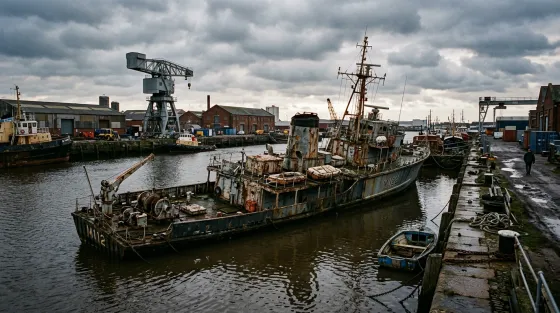
The maritime history of the United Kingdom is replete with vessels that served as the backbone of national security during the twentieth century. Among these, HMS Bronington (M1115), a Ton class minesweeper, occupies a position of unique historical provenance. This vessel is not merely a relic of Cold War naval architecture but also holds a significant biographical link to the British monarchy, having been commanded by His Majesty King Charles III during his naval service in 1976. Currently, however, the ship faces a precarious future, partially submerged and decaying in a dock on the Wirral.
Technical Specifications and Historical Context
Commissioned in the 1950s, HMS Bronington was part of a strategic initiative to counter the threat of magnetic mines. To achieve this, the vessel was constructed with a mahogany hull and aluminium frames, materials chosen for their non-ferrous properties. This design allowed the minesweeper to operate in hazardous waters where steel hulled ships would have triggered catastrophic explosions. During the height of the Cold War, these vessels were essential for maintaining the safety of shipping lanes and ensuring the operational readiness of the Royal Navy.
The tenure of the then Prince of Wales as the commanding officer of HMS Bronington added a layer of cultural and institutional importance to the vessel. His period of command represents a tradition of naval service within the Royal Family, further elevating the ship from a standard military asset to a site of national heritage. Despite this pedigree, the vessel was decommissioned in 1988 and eventually transitioned into the civilian sector, where its condition began a slow and visible decline.
The Current State of Degradation
For nearly two decades, HMS Bronington has remained abandoned in Birkenhead. The environmental impact of prolonged exposure to brackish water and the lack of consistent maintenance have resulted in significant structural failure. In 2016, the vessel suffered a major hull breach, leading to its partial submersion at its moorings. The sight of a former royal command sinking into the silt has become a poignant symbol of the challenges facing maritime conservation in the United Kingdom.
From an engineering perspective, the salvage of a wooden hulled vessel that has been submerged for several years presents substantial difficulties. The saturation of the timber and the accumulation of marine growth complicate any efforts to refloat the ship without causing further catastrophic damage. Nevertheless, the historical value of the vessel continues to inspire a dedicated group of advocates who seek to prevent its total loss.
The HMS Bronington Preservation Trust
In response to the imminent threat of the ship being scrapped, the HMS Bronington Preservation Trust was established. This organisation, comprised largely of former naval personnel and maritime enthusiasts, has undertaken the arduous task of raising funds and developing a viable recovery plan. Their objective is to lift the vessel from the water, transport it to a specialist facility, and eventually restore it as a museum ship or a static memorial.
The economic considerations of such a project are considerable. In an era of fiscal constraint, securing public or private funding for the restoration of a mid-twentieth-century warship is a complex endeavour. However, proponents argue that the loss of HMS Bronington would represent a permanent erasure of a vital chapter in British naval history. The trust remains optimistic that with sufficient public support and government recognition, the vessel can be saved from its current state of neglect.
Conclusion and Verdict
The situation regarding HMS Bronington serves as a critical case study in the prioritisation of maritime heritage. While the costs of restoration are high, the cultural and historical dividends of preserving one of the last wooden hulled minesweepers are equally significant. As the vessel continues to battle the tides on the Wirral, the window for intervention is narrowing. A decisive commitment to its preservation is necessary to ensure that this unique piece of royal and naval history is not lost to the seabed forever.
Read the original article at source.




No comments yet. Be the first to share your thoughts.