Stop Getting Soaked: A Scientist’s Guide to Saving Your Leaky Raincoat
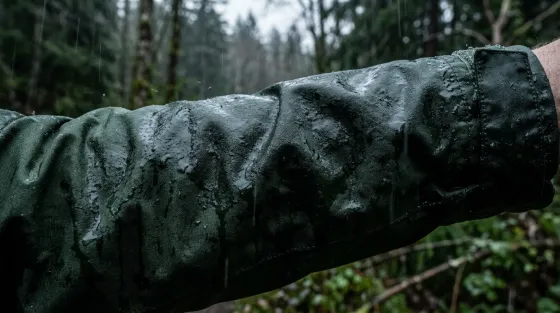
It is a classic British tragedy. You have spent a small fortune on a high-end waterproof jacket, promising yourself that this is the year you finally conquer the Lake District in the drizzle. You head out, the clouds darken, and within twenty minutes, you feel that tell-tale dampness creeping across your shoulders. You feel betrayed. You feel soggy. Most importantly, you feel like you have wasted three hundred quid.
The Great Waterproof Delusion
Before you bin the jacket and resign yourself to a life of plastic ponchos, let us look at the science. As a textile scientist, I can tell you that your jacket probably is not actually leaking. In most cases, it is simply failing to breathe, or it is suffering from a phenomenon we call wetting out. When the outer fabric of your coat becomes saturated with water, it creates a cold, heavy barrier that prevents your sweat from escaping. That moisture you feel on the inside? That is not the rain. That is you. You are essentially stewing in your own juices.
Modern waterproofs rely on two things: a membrane (like Gore-Tex) and a Durable Water Repellent (DWR) coating. The membrane is a clever bit of kit with billions of tiny holes that are too small for liquid water to enter but large enough for water vapour (sweat) to escape. The DWR is a chemical treatment on the outside that makes water bead up and roll off like marbles. When that DWR fails, the outer fabric soaks up water, the membrane gets blocked, and the breathability drops to zero. Here is how to fix it without breaking the bank.
Step One: The Counter-Intuitive Wash
Most people are terrified of putting their technical gear in the washing machine. They treat their mountain shell like a Victorian lace doily. This is a mistake. Dirt, oil, campfire smoke, and even your own skin oils are the enemies of performance. These contaminants clog the membrane and attract water. A clean jacket is a happy jacket.
However, do not reach for the supermarket biological detergent. Standard laundry soaps are designed to help water penetrate fabrics, which is the exact opposite of what we want here. They leave behind a residue that acts like a magnet for moisture. Instead, spend a few pounds on a dedicated tech wash. Brands like Nikwax or Grangers are the gold standard here in the UK. Clean out your detergent drawer first to remove any leftover Persil, and run a 30-degree cycle. Your jacket will thank you for it.
Why Surfactants Are the Enemy
In the world of textile chemistry, surfactants are what make soap work. They break the surface tension of water. On a raincoat, you want the highest surface tension possible so the water stays in droplets. If you use regular detergent, you are essentially coating your jacket in a chemical that tells the rain, please, come on in, the weather is lovely. Always use the right juice for the job.
Step Two: The Magic of Heat
This is the part that feels like witchcraft. Once your jacket is clean and still slightly damp, it needs heat. Most modern DWR treatments are composed of tiny molecular chains that stand up like little hairs to keep water away. Over time, these hairs get flattened or matted down. Applying gentle heat helps these molecules realign and stand back up.
Check the care label, but most manufacturers recommend a tumble dry on a low to medium heat for about twenty minutes. If you do not have a tumble dryer, you can use a cool iron with a towel placed between the iron and the jacket. You are not trying to cook it; you are just giving the chemistry a gentle nudge to get back to work. If you see water beading on the surface again after this, you have saved yourself the cost of a new coat.
Step Three: Re-proofing for the Long Haul
Eventually, the original DWR coating will simply wear away. This is inevitable, especially in high-friction areas like under the armpits or where your rucksack straps rub. When the tumble dryer trick no longer works, it is time to re-apply the magic.
You have two choices: wash-in treatments or spray-on treatments. As a scientist, I am firmly in the spray-on camp. Wash-in products coat the entire garment, including the inside. While this sounds efficient, you do not actually want the inside of your jacket to be water-repellent, as that can interfere with the moisture-wicking properties of the lining. A spray-on treatment allows you to target the outer face of the fabric, particularly the shoulders and hood where the rain hits hardest.
The Environmental Shift
It is worth noting that the industry has moved away from older, more durable chemicals known as PFCs because they stay in the environment forever. The newer, eco-friendly alternatives are much better for the planet, but they are slightly less robust. This means you need to maintain your gear more frequently than you did ten years ago. It is a small price to pay for not poisoning the local water supply.
The Verdict: Repair Over Replace
In our current economy, spending hundreds of pounds on a new jacket every time the old one gets a bit damp is madness. For the price of a couple of pints, you can buy a bottle of tech wash and a proofer that will last you several seasons. It is better for your wallet and significantly better for the environment. Most technical gear is built to last a decade if you treat it with a bit of scientific respect.
So, the next time you find yourself shivering in a soggy shell, do not blame the brand. Go home, give it a proper scrub, a bit of heat, and a fresh coat of repellent. You will be back to ignoring the British weather in no time.
Read the original article at source.





No comments yet. Be the first to share your thoughts.