Starmer’s Drone Dilemma: Could UK Tech Keep the Strait of Hormuz Open?
A New Tech-Led Strategy for the Middle East
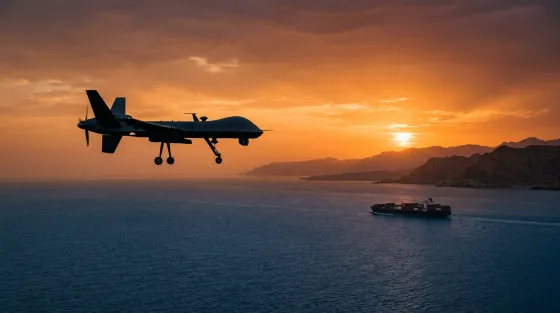
It seems the UK government is dusting off its drone playbook. Reports suggest that Sir Keir Starmer might be considering sending thousands of Octopus interceptor drones to the Middle East. The goal? To help secure the Strait of Hormuz, a shipping lane so vital to the global economy that even a minor hiccup sends oil prices into a tailspin.
This move comes after reported pleas from Donald Trump for international assistance in keeping the region stable. It is a classic geopolitical pivot, but one that relies heavily on the tech we have been refining for the frontlines in Ukraine.
Why the Octopus System?
The Octopus interceptor drone has gained a reputation for being a bit of a workhorse. Originally designed to counter Russian threats in the ongoing conflict in Ukraine, these systems have proven remarkably effective at neutralising incoming aerial threats. Now, the question is whether that same logic can be applied to intercepting Iranian Shahed drones.
From a technical standpoint, the appeal is obvious. Traditional air defence systems are eye-wateringly expensive. Firing a multi-million pound missile at a drone that costs a fraction of the price is the kind of fiscal nightmare that keeps Ministry of Defence accountants up at night. Using swarms of smaller, cheaper interceptors is the smarter, more modern approach to a very old problem.
The UK’s Economic Perspective
Let’s be honest: we are all feeling the pinch right now. With the cost of living still a primary concern, the prospect of UK military hardware being deployed abroad is always going to be a point of contention. However, the Strait of Hormuz is not just a distant waterway. A significant portion of the world’s oil and gas passes through this narrow choke point. If trade there is disrupted, we see the consequences at the petrol pump and on our heating bills within weeks.
Investing in drone technology is essentially an insurance policy. If these interceptors can keep the shipping lanes open without requiring a massive, permanent deployment of Royal Navy assets, it might actually be the most cost-effective way to protect our interests.
The Risks and the Reality
Of course, no piece of hardware is a magic wand. Sending drones to the Middle East brings a unique set of logistical and diplomatic headaches. We have to consider the risk of escalation. Will this make the UK a more direct target? Will the tech hold up in the blistering heat and sandy conditions of the Gulf, which are a far cry from the climates of Eastern Europe?
Defence sources remain cautious, and rightly so. While the technology is impressive, the theatre of war in the Middle East is complex. We are not just talking about stopping a few drones; we are talking about navigating a powder keg of regional tensions where one wrong move could have massive ripple effects.
Final Thoughts
Whether this plan moves from the drawing board to the desert remains to be seen. It is a bold move to leverage tech developed for one conflict to solve a problem in another, but it highlights the reality of modern warfare: it is increasingly becoming a battle of the drones. If the UK can provide the kit to keep the lights on and the tankers moving, it might be a price worth paying. But let us hope the strategy is as sharp as the hardware.
Read the original article at source.




No comments yet. Be the first to share your thoughts.