When the Referee Picks a Side: Inside the FCC's Cosy Campaign Against Disney
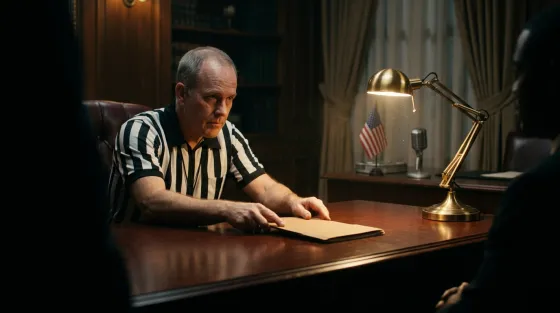
There is something deeply uncomfortable about a regulatory body that is supposed to be an impartial umpire suddenly looking like it has a favourite team. According to emails obtained by Wired, an FCC enforcement official who oversees West Coast broadcast stations, including those owned by Disney's ABC, privately offered to assist FCC Chair Brendan Carr in his campaign against the entertainment giant. If true, it is the kind of revelation that makes you wonder whether "independent regulator" has quietly become an oxymoron.
The Emails That Sparked a Firestorm
The report, authored by Dell Cameron and published on 19 March 2026, centres on internal emails revealing that a civil servant responsible for overseeing ABC-owned California stations reached out to Carr's office with an offer of help. The exact identity of the official has not been publicly confirmed, though the FCC's Enforcement Bureau is headed by Loyaan A. Egal. Whether this was Egal himself or a regional field office chief remains unclear, but the implications are identical: someone whose job description demands neutrality apparently decided to pick a lane and floor it.
Wired obtained the emails directly, and while the full contents have not been released publicly, the story has been referenced by Nieman Journalism Lab, NPR, and multiple other outlets. Nobody appears to be disputing that the correspondence exists. That alone is rather telling.
How We Got Here: A Brief and Slightly Exhausting Recap
To understand why leaked emails from one civil servant matter so much, you need the backstory. Strap in, because it is quite the ride.
In March 2025, Carr sent a letter to Disney CEO Bob Iger directing the FCC Enforcement Bureau to investigate ABC's diversity, equity, and inclusion practices. His specific grievance centred on ABC Entertainment's inclusion standards, first reported by Variety in 2020, which required that 50% of regular and recurring characters come from underrepresented groups. The standards also stipulated that 50% or more of writers, directors, crew, and vendors meet demographic criteria.
Carr did not stop at expressing concern. He suggested that findings from the investigation could "fundamentally go to their character qualifications to even hold a licence." In plain English: cooperate or risk losing your broadcast licence. That is not a polite regulatory nudge. That is someone waving a sledgehammer while insisting they are just holding it for a friend.
The irony is worth savouring. Disney had already started backing away from its DEI commitments before Carr's letter even arrived. In February 2025, the company quietly removed its Reimagine Tomorrow website and, on 11 February, swapped "Diversity & Inclusion" for the considerably blander "Talent Strategy" in its executive compensation metrics. The Mouse House could evidently read the political room rather well on its own, which makes you wonder what exactly the investigation was meant to achieve beyond sending a very public message.
The Kimmel Affair: When Things Got Properly Dramatic
Then came September 2025, and the situation escalated from tense to theatrical.
Jimmy Kimmel made remarks on his late-night show that drew the ire of certain political figures. On 17 September, Carr appeared on Benny Johnson's podcast and issued what can only be described as a not-so-veiled threat to ABC affiliates: "We can do this the easy way or the hard way." Subtle stuff.
The response was swift and, frankly, startling. Nexstar and Sinclair, two of America's largest broadcast groups, pulled Kimmel's show within hours. This becomes less surprising when you consider that retransmission consent represents more than 50% of total revenue for companies like Nexstar, Sinclair, and TEGNA. When the regulator starts making threatening noises, the financial incentive to comply is not just enormous; it is existential.
Disney itself then suspended Jimmy Kimmel Live!, only to restore it on 23 September following a wave of public backlash. The FCC received over 1,600 complaints about the whole affair, and the overwhelming majority were critical of the suspension and of Carr himself. So that went well for everyone involved.
A Pattern, Not a One-Off
Here is the thing that ought to concern everyone, regardless of where you sit politically: this is not an isolated incident.
Carr has opened investigations into every major US broadcast network except Fox. He has also turned his attention to PBS, NPR, and even The View over equal time rules. Comcast's NBCUniversal and Verizon have faced similar scrutiny. Meanwhile, CBS settled with Trump for $16 million during the Paramount-Skydance merger review, a payment that raises its own thorny questions about the relationship between regulatory power and editorial independence.
Democrats on the Energy and Commerce Committee have launched their own investigation into Carr's actions, characterising them as attacks on the First Amendment. Whether or not you agree with that framing, the conspicuously selective nature of the enforcement does rather speak for itself.
Why This Latest Revelation Actually Matters
The Wired report adds a new and genuinely troubling dimension to an already fraught situation. It is one thing for a politically appointed chair to pursue an aggressive regulatory agenda. That is, at minimum, within the bounds of how such appointments work, even if it makes press freedom advocates break out in hives.
It is quite another for career civil servants, the people who are supposed to ensure institutional continuity and impartiality, to privately volunteer for what looks an awful lot like a political operation. If enforcement staff are actively seeking ways to assist in targeting specific companies, the line between regulation and retaliation becomes vanishingly thin. The FCC's legitimacy depends on the perception that its enforcement actions are driven by law and evidence, not by which media company annoyed which politician last Tuesday.
The View from Across the Pond
For those of us watching from this side of the Atlantic, there is a broader lesson here about what happens when regulatory bodies become instruments of political pressure. Ofcom, take note.
The American broadcast landscape is being reshaped not by market forces or technological change, but by the implicit threat that your licence could be at stake if your programming displeases the wrong people. That should concern anyone who values a free press, regardless of whether they find Jimmy Kimmel remotely amusing.
As of now, the FCC has not publicly responded to Wired's reporting on the enforcement official's emails. The full scope of the internal communications remains unknown. But what has already emerged paints a picture of an agency where the boundaries between political direction and enforcement independence have become, at best, thoroughly blurred. At worst? Well, those emails rather suggest the boundaries have been cheerfully abandoned altogether.
Read the original article at source.





No comments yet. Be the first to share your thoughts.