Police Had a Warrant to Stop the Nottingham Killer. It Sat in an Unchecked Inbox for Ten Months.
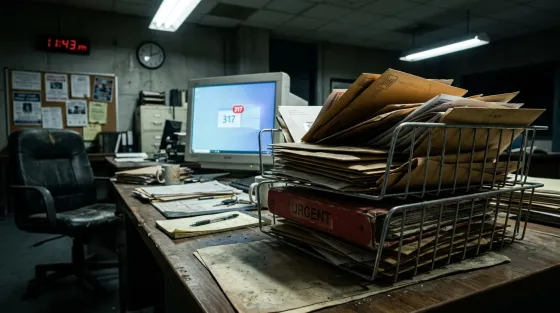
If you have ever used the excuse "sorry, I didn't check my emails" to dodge something mildly inconvenient, spare a thought for Nottinghamshire Police. They essentially pulled the same trick, except what went unchecked was an arrest warrant for a man who would go on to kill three people.
The Nottingham Inquiry has been laying bare a series of institutional failures so staggering they would be darkly comic if the consequences were not so devastating. At the centre of the latest revelations is former Chief Constable Kate Meynell, who has admitted what the families of Barnaby Webber, Grace O'Malley-Kumar, and Ian Coates have known all along: Valdo Calocane should have been arrested long before he carried out his attacks on 13 June 2023.
The Warrant That Gathered Dust
Here is the timeline that should make your blood boil. In September 2022, Calocane failed to appear at Nottingham Magistrates' Court for assaulting an emergency worker. A warrant was duly issued for his arrest. On 23 September 2022, the details were transmitted via the NICHE police information management system from Leicestershire to Nottinghamshire Police.
And then... nothing.
The warrant landed in an inbox that, by the force's own admission, "was not regularly checked." No recorded updates were made. No action was taken. For approximately ten months, a warrant to arrest a man with a documented history of violent and erratic behaviour simply gathered digital dust.
Tim Moloney KC, representing the bereaved families, put it plainly at the inquiry: "That warrant was outstanding for 10 months." Ten months during which Calocane remained free. Ten months that ended on a June morning in Nottingham that changed multiple families forever.
Not One Missed Opportunity, But Two
If you think one missed chance to intervene is bad enough, the inquiry has revealed there was a second. Just one month before the attacks, Calocane assaulted colleagues at a factory in Kegworth, Leicestershire. Leicestershire Police attended but failed to spot the existing warrant sitting right there on the system.
Let that sink in. Two separate police forces, two separate opportunities to take a dangerous individual off the streets, and both times the ball was dropped with spectacular consistency.
Rob Griffin, temporary deputy chief constable of Nottinghamshire Police, described the situation as a "serious, systemic, operational failure." Which is, of course, police-speak for "we really messed this up on a colossal scale."
A Pattern of Warning Signs Nobody Seemed to Heed
The unexecuted warrant was far from the first red flag. Calocane, who was diagnosed with paranoid schizophrenia, had been on police radar for years. Each encounter should have raised alarm bells loud enough to wake the entire force.
- In May 2020, he broke into student accommodation in Nottingham. The incident was so frightening that a terrified woman jumped from a window to escape. Nottinghamshire Police have since acknowledged this should have been treated more seriously.
- In May 2021, he was stopped outside MI5 headquarters in London, where he asked officers to arrest him.
- In September 2021, he assaulted PC Barnaby Pritchard after refusing his medication.
Each incident was a flashing warning light. Each one, it appears, was noted and then filed away somewhere equally neglected. The pattern was there for anyone who cared to look. The trouble is, it seems nobody was looking.
Evidence That Vanished Into Thin Air
As if the litany of missed opportunities were not damning enough, the inquiry has also heard that crucial evidence has gone missing. Body-worn camera footage from relevant incidents was mistakenly deleted rather than being preserved. Police call recordings from the morning of the attacks themselves have been described as "seemingly lost or unavailable."
When you are already facing accusations of catastrophic institutional failure, losing the evidence is not exactly a confidence-inspiring move. It raises deeply uncomfortable questions about record-keeping practices that extend well beyond a single case. One starts to wonder what other critical information is languishing in unchecked inboxes or vanishing from servers across the country.
The Human Cost Behind the Bureaucratic Failings
Behind every line of this inquiry transcript are real people whose lives were destroyed on that June morning. Barnaby Webber, 19, and Grace O'Malley-Kumar, 19, were University of Nottingham students with everything ahead of them. Ian Coates, 65, was a school caretaker going about his day. Three more people - Sharon Miller, Wayne Birkett, and Marcin Gawronski - were seriously injured in the attacks.
These were not statistics on a spreadsheet or line items in a policing review. They were someone's children, someone's colleague, someone's friend. And their families now have to sit through an inquiry that confirms, in excruciating forensic detail, that the system meant to protect the public failed at almost every conceivable turn.
Accountability: Admission Is Not the Same as Action
Meynell, who has since retired following a cancer diagnosis, was at least unequivocal in her testimony. "I fully accept we should have arrested him," she told the inquiry. "That is unacceptable. Our processes around warrants weren't adequate."
Credit where it is marginally due: she said it plainly and without evasion. But admission and accountability are not the same thing. Saying "our processes weren't adequate" after three people are dead is rather like bolting the stable door after the horse has not only escaped but caused a multi-vehicle pile-up on the A1.
Calocane was eventually sentenced on 25 January 2024 at Nottingham Crown Court to an indefinite hospital order for manslaughter by diminished responsibility and attempted murder. NHS England has also issued an "unreserved apology" in relation to the case, acknowledging its own failures in mental health care provision.
Where the Inquiry Goes From Here
The public inquiry, announced by the Prime Minister on 12 February 2025 and chaired by Her Honour Judge Deborah Taylor, is examining the failures of both Nottinghamshire and Leicestershire police forces alongside health services. Hearings are running from 23 February to 31 May 2026, with a final report expected in 2027. The proceedings are being held in London but livestreamed on YouTube, with a dedicated viewing room set up in Nottingham for those who wish to follow closer to home.
The Bigger Question We Should All Be Asking
This case raises questions that extend far beyond Nottingham's city limits. How many other warrants are sitting in unchecked inboxes across the country right now? How many police information systems have blind spots that nobody is monitoring? How robust are the processes for flagging individuals with well-documented histories of violence and mental health crises?
The families of the victims deserve answers. The wider public deserves reassurance that lessons are actually being learned and acted upon, not simply "identified" in reports that gather as much dust as that warrant did for ten long months.
If there is one takeaway from this inquiry so far, it is brutally simple: systems are only as good as the people and processes behind them. An arrest warrant means nothing if nobody reads it. A police database means nothing if the inbox it feeds goes unchecked for the better part of a year. And an apology, however sincere, means precious little if the same failures are allowed to happen again.
Read the original article at source.


No comments yet. Be the first to share your thoughts.