Precision Warfare is an Oxymoron: The Bloody Cost of Lebanon's Healthcare Collapse
While most of us are currently preoccupied with whether the latest smartphone update will kill our battery life or if the local artisan coffee shop has hiked the price of a flat white again, the world outside our comfortable British bubble is undergoing a rather more violent transformation. Specifically, the situation in Lebanon has shifted from a simmering concern to a full-blown catastrophe in a timeframe that would make even the most aggressive Silicon Valley startup look sluggish. Over the last fortnight, health authorities report that at least 850 people have been killed. That is not just a tragic statistic: it is a monumental failure of international diplomacy and a stark reminder that the smart technology we celebrate in our pockets is being used for much darker purposes elsewhere.
The Myth of the Surgical Strike
We are often sold a narrative of modern warfare that sounds remarkably like a tech product launch. We hear terms like precision munitions, surgical strikes, and targeted operations. The marketing suggests that these weapons are so intelligent they can pick a single bad actor out of a crowded room without spilling a drop of tea. However, the reality on the ground in Lebanon tells a vastly different story. When 12 medics are killed in a single strike, the word precision starts to feel like a cruel joke. If your smart home hub accidentally turned off your fridge every time you tried to dim the lights, you would return it for a refund. When a missile system misses its supposed mark and obliterates a medical centre, there is no customer service department to call.
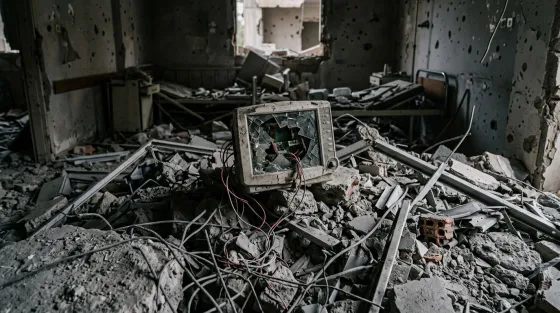
The reported strike on a healthcare facility has been described by survivors as being like an earthquake. This is not just a bit of poetic license from those on the scene: it is a literal description of the kinetic energy released by modern weaponry. For a healthcare system that was already struggling under the weight of an economic crisis that makes our own UK inflation woes look like a minor accounting error, this is the final straw. You cannot run a hospital when the staff are being buried in the rubble of their own clinics.
Why This Matters to the UK High Street
It is easy to look at news from the Middle East and think it has nothing to do with us in the UK, but that is a dangerous bit of self-deception. We live in a hyper-connected world where a shockwave in Lebanon eventually vibrates the coins in your pocket. From a purely economic perspective, regional instability in that part of the world is a recipe for market volatility. We have already seen how global conflicts can send energy prices on a vertical trajectory. If this escalates further, the cost of filling up your car or heating your home this winter could become even more of a fictional horror story than it already is. We are an economy that relies on stability, and right now, stability is in very short supply.
Furthermore, there is the matter of our own international standing. The UK has long positioned itself as a champion of international law and the protection of humanitarian workers. When those workers are being killed while trying to save lives, it puts our own foreign policy under the microscope. We cannot exactly boast about our moral compass if we are seen to be standing idly by while the very foundations of international humanitarian law are being treated as optional suggestions.
The Human Cost of Tech-Driven Conflict
The report from Bel Trew paints a picture that is hard to stomach. Medics, the people who are supposed to be the neutral healers in any conflict, are now find themselves in the crosshairs. This creates a terrifying precedent. If the people wearing the red cross or the red crescent are no longer safe, then nobody is. It is a complete breakdown of the rules of engagement that have supposedly governed warfare since the mid-nineteenth century. We are using twenty-first-century technology to settle scores with a medieval level of disregard for civilian life.
In the tech world, we often talk about disruption as a positive thing. We want to disrupt the banking industry or disrupt the way we order a taxi. But this is disruption in its most literal and lethal form. It is the disruption of families, the disruption of essential services, and the disruption of a nation's ability to function. The sheer scale of the displacement in Lebanon is staggering, with hundreds of thousands of people forced to flee their homes. Many of these people are now sleeping in parks or on the streets, a lifestyle shift that no amount of mindfulness apps can fix.
The Verdict on Precision
Is there a way out of this? History suggests that these things usually get much worse before they get any better. The current trajectory suggests that the healthcare system in Lebanon is being systematically dismantled, whether by design or by sheer negligence. Neither option is particularly comforting. For those of us watching from the safety of our sofas, it is a reminder that the technology we often take for granted has a double-edged sword that is currently cutting very deep.
The value for money here is non-existent. We are seeing billions of pounds worth of military hardware being used to create a humanitarian bill that will take decades to pay off. If we look at the alternatives, such as genuine diplomatic engagement and the enforcement of red lines regarding the protection of medics, they seem remarkably cheap by comparison. Unfortunately, diplomacy doesn't have the same high-tech sheen as a drone-mounted missile, so it often gets left on the shelf.
My final take on this is simple: we need to stop buying into the myth of the clean war. There is no such thing. Every time we hear about a surgical strike that kills a dozen doctors, we should be asking searching questions about the intelligence behind the weapons and the people pressing the buttons. From a UK perspective, we should be very concerned about the long-term implications for global security and our own economic stability. The earthquake in Lebanon is far from over, and we might all feel the aftershocks sooner than we think.
Read the original article at source.



No comments yet. Be the first to share your thoughts.