Postcards and Prams: The Gritty Reality Behind Cornwall's Coastal Facade
If you have ever spent a drizzly week in a coastal cottage in Cornwall, your memories likely involve lukewarm cider, overpriced artisanal ice cream, and trying to avoid seagulls with an appetite for violence. For the average holidaymaker, the county is a picturesque escape filled with turquoise waters and the ghost of Ross Poldark lingering on every cliff edge. However, for those who call these towns home year-round, the view is often less about scenic sunsets and more about the harsh reality of modern British decay.
The Illusion of the Cornish Dream
On the surface, everything looks like a scene from a Richard Curtis film. Take Saint Piran’s Day, for example. Every 5th of March, the streets are lined with proud locals watching children march with banners, celebrating the patron saint of tin miners. It is a moment of genuine community spirit, a splash of black and white flags against the grey Cornish sky. But look a little closer, and the paint is peeling. Behind the parades and the pasties, some of Cornwall's most historic towns are grappling with a level of crime and social unrest that would make a London borough blush.
The contrast is jarring. You can have a group of school children singing traditional songs on one corner, while just a few streets away, the local constabulary is preparing for another high-stakes raid. It is a tale of two counties: the one that exists for the summer tourists with their paddleboards, and the one that survives the winter with rising crime rates and a crumbling social fabric.
The Scent of the High Street
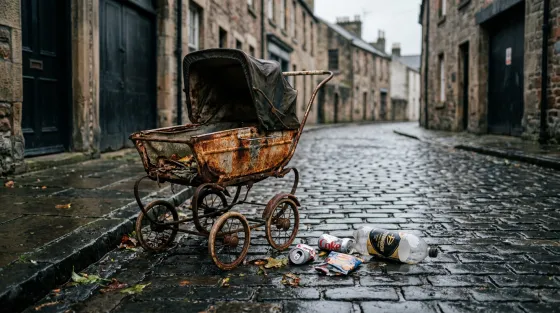
One of the most frequent complaints from residents in these troubled seaside spots isn't about the lack of parking or the price of a pint. Instead, it is the pervasive smell of the local nightlife, or rather, the local mid-afternoon life. Locals have reported the sight of mothers pushing prams through the town centre while casually smoking spliffs. It is a bold, if somewhat questionable, approach to multitasking.
The drug issue has become so normalised in some areas that it is almost part of the furniture. We are not just talking about a bit of recreational experimentation here. The fog of cannabis smoke on the high street is merely the visible tip of a much more dangerous iceberg. When drug use becomes this blatant in broad daylight, it signals a complete lack of fear regarding the consequences. For the elderly residents and families trying to go about their daily business, it creates an atmosphere of intimidation that no amount of sea air can clear.
Cuckooing: The Silent Invasion
While the open drug use is what makes the headlines, there is a much more sinister phenomenon happening behind closed doors: cuckooing. For the uninitiated, this is when criminal gangs, often from larger cities like London or Liverpool, move into the home of a vulnerable person. They use the property as a base for their operations, effectively turning a private residence into a drug den.
It is a brutal practice that preys on the lonely, the elderly, or those with mental health struggles. In a county like Cornwall, where isolation is a genuine issue, cuckooing has found fertile ground. The victims are often too terrified to speak up, trapped in their own homes while their lives are dismantled by outsiders. This isn't just a police matter; it is a heartbreaking social crisis that highlights just how thin the safety net has become in our coastal communities.
The Two Million Pound Crackdown
The authorities are not sitting idly by, of course. Recent police operations have seen raids netting over £2 million worth of illegal substances. These are not small-time operations. We are talking about organised crime networks that have identified the South West as a lucrative market. The scale of these raids is a testament to the severity of the problem. When you are pulling millions of pounds of drugs out of a quiet seaside town, you have to wonder how deep the roots actually go.
However, as any local will tell you, a single raid is often just a sticking plaster on a gaping wound. The police are doing what they can with limited resources, but the demand remains. In an economy that feels increasingly stacked against the working class, the lure of the drug trade, or the escape provided by its products, becomes harder to combat with traditional policing alone.
The Economic Divide
We cannot talk about the crime in Cornwall without talking about the money. The UK economy is currently a difficult beast to navigate, but in Cornwall, the disparity is particularly sharp. You have multi-million pound second homes sitting empty for ten months of the year, while just down the road, families are living in temporary accommodation or struggling to afford the basics. This economic imbalance creates a sense of resentment and hopelessness, which is the perfect breeding ground for the issues we are seeing today.
When the local high street is dominated by charity shops and empty units, and the only thriving business seems to be the one operating out of a back alley, the community's pride begins to erode. The people of Cornwall are notoriously resilient, but even the strongest spirit can be worn down by years of underinvestment and the feeling that their beautiful home is being sold off to the highest bidder while they are left with the fallout.
The Verdict
Cornwall is a jewel in the UK's crown, but it is a jewel with a significant flaw. The issues of drug use, cuckooing, and blatant crime are not going to be solved by a few more police patrols or a successful festival. It requires a genuine look at the underlying economic factors that have allowed these problems to flourish. We need to move beyond the postcard-perfect image and start addressing the reality of the people who actually live there.
For now, the advice is simple: enjoy the beaches, buy a pasty, but do not be surprised if the local atmosphere is a little more grit than glamour. It is a beautiful part of the world, but it is one that is currently fighting for its soul.
Read the original article at source.



No comments yet. Be the first to share your thoughts.