Petrol, Politics, and Pipelines: Zelensky’s EU Oil Row Explained
The Geopolitical Soap Opera Continues
Welcome to the latest episode of 'How to Annoy Your Neighbours While Fighting a War.' This week, President Volodymyr Zelensky is taking on some of his EU pals in a row over a very specific, very oily pipe. If you thought your household arguments about who left the immersion heater on were tense, wait until you see what is happening with the Druzhba pipeline.
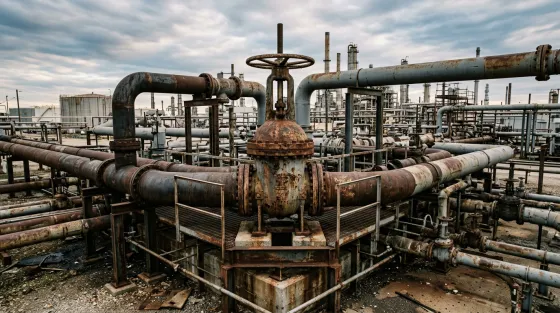
For those not up to speed on their Soviet-era infrastructure, the Druzhba pipeline, which ironically translates to 'Friendship,' is one of the longest oil pipelines in the world. It carries Russian crude through Ukraine and into several central European countries. Recently, however, the friendship has been looking a bit thin. Ukraine decided to block the flow of oil from the Russian firm Lukoil, and certain EU neighbours are, to put it mildly, throwing a bit of a wobbler.
The Blackmail Accusation
President Zelensky has not minced his words. He has accused some of his EU allies of 'blackmail' regarding this pipeline row. His logic is fairly straightforward: restoring the flow of Russian oil via Ukraine into the EU would be effectively the same as lifting sanctions on Russia. From where he is sitting, it is a bit rich to ask a country currently being invaded to help the invader sell their most valuable export.
Imagine someone is trying to kick your front door down, and your next-door neighbour asks if you could just let the intruder use your driveway to deliver some petrol to their house because it is a bit cheaper than the local station. You would probably have a few choice words for that neighbour too. Zelensky’s take is that you cannot claim to support Ukraine with one hand while trying to keep the Russian oil taps wide open with the other.
The Grumpy Neighbours: Hungary and Slovakia
The main protagonists on the other side of this spat are Hungary and Slovakia. These two nations are landlocked and heavily dependent on that Russian crude. Hungary’s Viktor Orbán and Slovakia’s Robert Fico have been vocal about their displeasure. They argue that Ukraine’s move threatens their energy security and could lead to a massive spike in fuel prices for their citizens.
From a UK perspective, we know all about the cost of living crisis and the pain at the pump. While we have largely moved away from Russian energy, these central European nations are in a tighter spot geographically. However, their insistence on keeping the Russian oil flowing has put them at odds with the broader EU consensus. It has created a bit of a playground standoff where Brussels is trying to play the weary teacher, while the students are all pointing fingers at each other.
Why This Matters for the UK Economy
You might be wondering why a row over a pipeline in central Europe matters to someone filling up their hatchback in Manchester. The reality is that the energy market is a global, interconnected mess. Any instability in how oil moves across Europe can send ripples through the markets. If Hungary and Slovakia start panicking and looking for alternative supplies on the open market, they drive up the price for everyone else, including us.
Furthermore, this row highlights the cracks in the European united front against Russia’s aggression. For the UK, which has been one of the most steadfast supporters of Ukraine, seeing EU members squabble over energy bills is frustrating. It reminds us that the transition to green energy or at least energy independence is not just a climate goal, it is a massive security requirement.
The Verdict
Is Zelensky being too harsh? Probably not. When your country is under constant bombardment, you tend to lose your patience for diplomatic niceties. Is Hungary being selfish? It certainly looks that way from the outside, though they would argue they are simply protecting their own taxpayers. The real issue here is the lingering addiction to cheap Russian energy that should have been cured years ago.
The Druzhba pipeline row is a stark reminder that even as we talk about high-tech warfare and digital sanctions, the world still runs on old-fashioned liquid gold. Until the EU can fully decouple its energy needs from Moscow, these rows are going to keep happening. For now, Zelensky is standing his ground, and the 'Friendship' pipeline remains anything but friendly.
Read the original article at source.

No comments yet. Be the first to share your thoughts.