Nebraska Is Burning: A Grim Reminder That Mother Nature Has A Temper
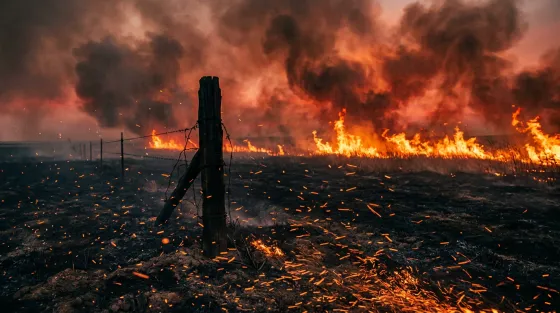
While we in the United Kingdom tend to treat a light dusting of snow like a full scale national emergency and watch our railway tracks buckle the moment the sun comes out for more than twenty minutes, our cousins across the pond are currently dealing with something far more terrifying. Nebraska is currently being ravaged by a series of four wildfires that have effectively turned half a million acres of land into a scene from a post-apocalyptic film. It is the largest fire event the state has ever recorded, and the human cost is starting to mount in the most tragic way imaginable.
A Heartbreaking Loss in the Heartland
The headline news is as sobering as it gets. Rose White, an 86 year old grandmother from the local area, has tragically lost her life while attempting to flee the encroaching flames. State Governor Jim Pillen confirmed the news, marking a dark day for a community already pushed to the brink. It is the kind of story that makes our daily tech gripes about battery life or slow broadband seem entirely insignificant. When the order comes to get out, you do not check your notifications; you run. Sadly, for some, even that is not enough when the wind is against you.
The scale of this disaster is difficult to wrap your head around if you are sitting in a semi-detached house in the suburbs. We are talking about over 500,000 acres. To put that into a British perspective, that is roughly the size of Oxfordshire being wiped off the map in a matter of days. It is not just a bit of scorched grass; it is a total erasure of property, livestock, and history. Officials are currently worried that the worst is yet to come, as weather conditions remain stubbornly uncooperative.
The Tech Battle: Drones, Satellites, and Luck
As a tech focused blog, we often look at how gadgets can solve our problems. In the case of wildfires, we are seeing a massive surge in the use of thermal imaging drones and satellite data to track fire fronts in real time. Firefighters are using sophisticated mapping software to predict where the embers might jump next. However, as Nebraska is proving, even the most expensive silicon and software can be humbled by a stiff breeze and some dry tinder. We have all this incredible technology at our fingertips, yet we are still largely at the mercy of the elements.
There is an irony in the fact that we can track a pizza delivery to our front door with metre-perfect precision, yet predicting the exact path of a wildfire remains a game of high stakes probability. The emergency services in Nebraska are doing a heroic job with the tools they have, but when you are facing four separate fires of this magnitude, the tech becomes a support act to the raw, exhausting work of physical containment.
The Economic Reality of a Warming World
From a UK economy perspective, we should be paying attention. These events are not just American tragedies; they are global economic indicators. As these fires become more frequent and more intense, the cost of insurance is going to skyrocket. We are already seeing insurance firms pull out of high risk areas in the US, and it is only a matter of time before similar risk assessments start affecting how we live and build in the UK. If you think your home insurance premium is high now, wait until the actuaries factor in a world that is increasingly prone to spontaneous combustion.
Then there is the agricultural impact. Nebraska is a powerhouse of food production. When half a million acres burn, that is not just land; that is potential food supply and livelihoods. In an era where the cost of living is already making us wince at the supermarket checkout, large scale environmental disasters like this have a funny way of making our weekly shop even more expensive. Everything is connected, from a dry field in the Midwest to the price of a loaf of bread in Leeds.
A Warning for the Rest of Us
It is easy to look at news from the US and feel a sense of detachment. We do not really have wildfires on this scale in Britain, do we? Well, not yet. But as our summers get drier and our heatwaves get longer, the risk of heathland fires in places like Surrey or the Peak District is rising. We are not equipped for this. Our fire services are already stretched thin, and our infrastructure is built for a climate that seems to be disappearing in the rear view mirror.
The situation in Nebraska is a wake up call. It is a reminder that while we obsess over the latest AI chatbots and whether our next car should be electric, the planet is operating on its own timeline. The loss of Rose White is a tragedy that should never have happened, and it highlights the desperate need for better evacuation protocols and more robust environmental management.
The Verdict
Is there a silver lining? Not really. This is a grim situation that serves as a reality check for anyone who thinks climate change is a problem for the next generation. It is happening now, it is lethal, and it is expensive. Our tech can help us monitor the destruction, but it cannot stop it once it starts. We need to be smarter about how we manage our land and how we support those on the front lines of these disasters.
For now, our thoughts are with the residents of Nebraska and the family of Rose White. It is a stark reminder to hold your loved ones close and perhaps stop complaining about the rain for a few days. After all, rain is exactly what Nebraska needs right now.
Read the original article at source.

No comments yet. Be the first to share your thoughts.