Meta Killed Instagram's Encrypted DMs and Blamed You for Not Using Them
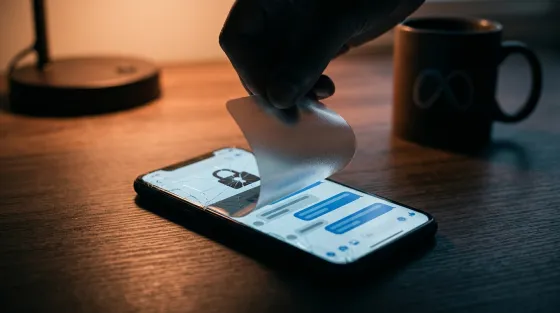
In what might be the most brazen bit of corporate sleight-of-hand this year, Meta has announced it is stripping end-to-end encryption from Instagram direct messages. The reason? Apparently, not enough of you were using it. Which is a bit like hiding your shop's front door behind a wardrobe, then blaming customers for poor footfall.
What Actually Happened
On 13 March 2026, Meta confirmed that end-to-end encrypted (E2EE) messaging on Instagram would be switched off after 8 May 2026. A Meta spokesperson offered this gem of a justification: 'Very few people were opting in to end-to-end encrypted messaging in DMs, so we're removing this option from Instagram in the coming months.'
On the surface, that sounds almost reasonable. Why maintain a feature nobody uses? But scratch beneath the surface and the whole thing starts to smell a bit off.
The Feature Nobody Could Find
Here is the thing about Instagram's E2EE option: it was practically invisible. According to investigations by Platformer and Android Police, activating encrypted DMs required navigating four separate taps deep into the app's settings. Meta never advertised the feature within the app itself. It was never turned on by default. It was not even available in all regions.
To put that in perspective, Instagram will happily throw a full-screen notification at you because someone you met once at a barbecue in 2019 has gone live. But a feature that protects your private conversations from prying eyes? Buried deeper than a time capsule.
Critics argue, and it is hard to disagree, that Meta effectively sabotaged its own encryption rollout. By making E2EE practically impossible to discover, never promoting it, and limiting its availability geographically, the company manufactured the very low adoption rates it now cites as grounds for removal. It is a self-fulfilling prophecy wrapped in a corporate press release.
The Timing Is Suspicious, to Put It Mildly
If the burial of the feature raises eyebrows, the timing of its removal should set alarm bells ringing. The Take It Down Act, a US law targeting the spread of non-consensual intimate imagery online, begins enforcement on 19 May 2026. That is just eleven days after Instagram's encryption cutoff.
Without encryption, Meta can resume automated content scanning, AI-powered moderation, and full compliance with law enforcement data requests. With encryption in place, that kind of surveillance simply is not possible. The timing is, at best, remarkably convenient.
Meta Knew What It Was Doing
This is not a company stumbling into a difficult decision. Internal Meta documents, unsealed during a court case in New Mexico, reveal that the company has been wrestling with the tension between encryption and content moderation for years.
Back in March 2019, Monika Bickert, Meta's head of content policy, described the plan to encrypt messaging as 'so irresponsible' in internal communications. A February 2019 internal briefing estimated that encryption across Meta's platforms would cause reports to the National Center for Missing and Exploited Children (NCMEC) to drop by 65%, plummeting from 18.4 million to just 6.4 million.
The same documents projected that encryption would have prevented proactive referrals in 600 child exploitation cases, 1,454 sextortion cases, 152 terrorism-related cases, and 9 threatened school shootings. These are not abstract numbers. They represent real harm that goes undetected when messages cannot be scanned.
Meta spokesperson Andy Stone later acknowledged Bickert's concerns, stating they 'represent the very reason we developed a range of new safety features' before launching encryption. Whether those safety features were adequate is another matter entirely.
The Real-World Impact We Have Already Seen
We do not need to speculate about what happens when Meta encrypts a messaging platform. We have already seen it play out with Messenger.
Meta made Messenger's E2EE the default setting in December 2023. The result? NCMEC received 29.2 million incident reports in 2024, down from 36.2 million in 2023. That is roughly 7 million fewer reports in a single year, with NCMEC attributing the bulk of the decline directly to Meta's encryption rollout.
It is worth noting that Messenger's encryption rollout was itself incomplete. Research by Accountable Tech found that two-thirds of surveyed users still lacked default encryption months after the announcement. So the full impact may be even larger than those figures suggest.
Why This Matters Beyond Instagram
Privacy experts are worried that this decision could be the first domino to fall for end-to-end encryption globally. If the world's largest social media company can argue that low adoption justifies removing encryption, what stops others from following suit?
TikTok has already stated it has no plans to introduce E2EE for direct messages. The UK's Online Safety Act, passed in 2023, gives regulators broad powers that could pressure encrypted platforms. The EU's proposed Chat Control regulation would require platforms to scan messages for illegal content, something fundamentally incompatible with genuine end-to-end encryption. The European Commission is expected to present a Technology Roadmap on encryption sometime this year, evaluating so-called 'lawful access' solutions.
The direction of travel is clear: governments want access to private messages, and tech companies are finding it increasingly difficult, or increasingly convenient, to resist.
The Encryption Double Standard
What makes Meta's position particularly difficult to stomach is its inconsistency. WhatsApp has had end-to-end encryption since 2016 and Meta shows no signs of removing it. Messenger's default encryption, rolled out in December 2023, also remains in place. Instagram, the platform most popular with younger users and therefore arguably the one most in need of strong privacy protections, is the one getting its encryption revoked.
Mark Zuckerberg himself published a 3,000-plus word note in 2019 advocating for a privacy-focused future across all of Meta's platforms. Seven years on, Instagram users are getting the opposite of that vision.
What This Means for You
If you use Instagram DMs for anything remotely private, be aware that after 8 May 2026 your messages will no longer have the option of end-to-end encryption. Meta will be able to scan, moderate, and hand over the contents of your conversations.
For most people sending memes and making dinner plans, this probably will not change much day to day. But for journalists, activists, domestic abuse survivors, whistleblowers, and anyone else who relies on private communication for their safety, this is a genuine step backwards.
The broader concern is not just about one feature on one platform. It is about whether encryption, the single most effective tool we have for digital privacy, is being quietly eroded across the internet. Meta's decision to kill Instagram's E2EE, a feature it never really gave a fair chance, suggests the answer might be yes.
And that should worry all of us, regardless of whether we ever found the toggle.
Read the original article at source.





No comments yet. Be the first to share your thoughts.