Jadon Sancho and the Art of the Vanishing Act: A Manchester United Post-Mortem
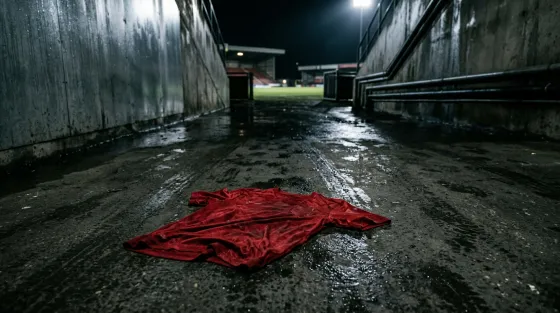
It was the transfer saga that lasted longer than most marriages. For three consecutive summers, Manchester United fans were treated to a repetitive loop of rumours, flight tracking, and Dortmund executives playing hardball. When Jadon Sancho finally arrived at Old Trafford in 2021 for a cool 73 million pounds, the red half of Manchester collectively exhaled. They thought they had secured the final piece of the puzzle, a generational talent who would tear up the Premier League wings for the next decade. Instead, what followed was a slow motion car crash that ended with a quiet exit to West London. It is a tale of tactical confusion, social media spats, and the most expensive canteen ban in history.
The Multi Year Chase for a Mirage
To understand why this failure hurts so much, you have to remember the hype. Sancho was not just another winger; he was the poster boy for the new English generation. While most teenagers were struggling with university applications, Sancho was in the Bundesliga putting up numbers that made Lionel Messi look like an amateur. He had 50 goals and 64 assists in four seasons at Borussia Dortmund. He was the creative engine that United desperately lacked. The club chased him with an obsession that bordered on the unhealthy. When they finally got their man, the expectations were through the roof. It was the footballing equivalent of buying a Ferrari and only using it to drive to the local corner shop for a pint of milk.
The Tactical Tangle
The first sign of trouble was the realization that nobody seemed to know where to put him. Under Ole Gunnar Solskjaer, Sancho was signed to solve the right wing problem. However, he spent most of his time on the left. Then came the managerial carousel. Ralf Rangnick arrived with his spreadsheets and high pressing demands, followed by Erik ten Hag and his strict discipline. Sancho looked like a man trying to solve a Rubik's cube while being shouted at in a language he did not understand. The explosive pace he showed in Germany seemed to have vanished in the Manchester rain. He was frequently outmuscled, outrun, and eventually, out of the starting eleven. In the Premier League, you do not get the same time on the ball that you do in the Bundesliga, and Sancho found that out the hard way.
The Instagram Post Heard Round the World
The beginning of the end arrived on a Sunday afternoon in September 2023. After being dropped for a match against Arsenal, Ten Hag told the press that Sancho had not reached the required level in training. In the old days, a player might have taken that on the chin or had a quiet word in the office. Not Jadon. He took to social media to call himself a scapegoat and essentially accused his boss of lying. In the world of Erik ten Hag, a man who treats discipline with the same reverence a librarian treats silence, this was the ultimate sin. The fallout was swift and brutal. Sancho was banished from the first team squad, told to train with the kids, and reportedly banned from using the senior team canteen. When you are earning hundreds of thousands of pounds a week but are not allowed to eat your lunch with your mates, you know things have gone south.
The Canteen Exile and the Dortmund Sabbatical
For months, Sancho became the invisible man of Old Trafford. He was the ghost in the machine, a 73 million pound asset sitting at home playing video games while his teammates struggled on the pitch. The standoff lasted until the January transfer window when he was shipped back to Dortmund on loan. It was a move that felt like a messy breakup where one person goes back to their parents to find themselves. In Germany, he showed flashes of the old Sancho. He helped Dortmund reach a Champions League final, proving that he had not entirely forgotten how to kick a ball. But even then, the consistency was not quite there. He was like a classic car that only starts on every third Sunday. It was enough to remind people why he was famous, but not enough to convince United to give him another chance.
The Financial Reality Check
In today's UK economy, where we are all watching our pennies and wondering if we really need that extra streaming subscription, the Sancho deal looks like a fiscal disaster. Manchester United paid 73 million pounds for a player who provided very little return on investment. If you calculate his cost per goal or assist, the figures are eye watering. By the time he was shipped off to Chelsea on a loan with an obligation to buy, his market value had cratered. United will likely take a massive loss on the player. It is a stark reminder that in modern football, throwing money at a problem does not always solve it. Sometimes, it just makes the problem more expensive to get rid of.
Why it Never Clicked
So, who is to blame? Is it the player for a perceived lack of application? Or is it the club for failing to provide a stable environment? The truth probably lies somewhere in the middle. Sancho arrived at a club in constant turmoil, with no clear identity and a revolving door of managers. However, great players usually find a way to shine regardless of the circumstances. Sancho always felt like a luxury player in a team that needed workers. He wanted to play at his own pace, but the Premier League waits for no one. He lacked the physical intensity required to survive in the English top flight, and when his confidence dipped, there was no coming back.
The Chelsea Escape Route
The move to Chelsea feels like a final roll of the dice for Sancho. He is back in London, closer to home, and playing for a club that seems to collect wingers like they are Pokemon cards. For United, it is a chance to turn the page and move on from one of the most disappointing chapters in their recent history. The nightmare is finally over, but the scars will remain. It serves as a cautionary tale for any club thinking that a high price tag and a YouTube highlight reel are enough to guarantee success.
The Verdict
Jadon Sancho is a player of immense talent who simply could not handle the pressure and the tactical demands of Manchester United. He was a square peg in a round hole, and the harder the club tried to force him in, the more he broke. While he might go on to have a decent career at Chelsea or elsewhere, he will forever be remembered at Old Trafford as one of the biggest what ifs in Premier League history. For the fans, it is a relief to see the saga end. For the club accountants, it is a lesson in the dangers of the transfer market. For Jadon, it is a chance to prove that he is more than just a scapegoat.
Read the original article at source.





No comments yet. Be the first to share your thoughts.