Apple Pro Display XDR Review: A 6K Masterpiece for People with More Money Than Sense?
The Audacity of the Price Tag
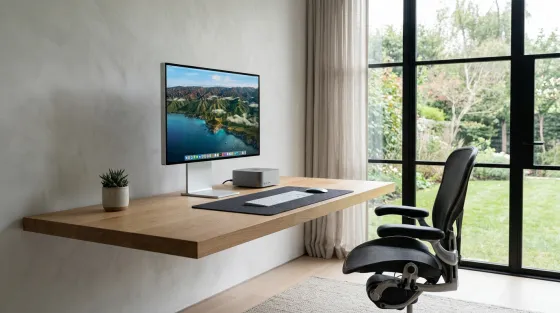
Let us start with the elephant in the room. Or rather, the elephant that costs more than a decent second-hand Ford Fiesta. When Apple launched the Pro Display XDR, the tech world collectively gasped. Not because of the 6K resolution or the 1,600 nits of peak brightness, but because they had the absolute gall to sell a monitor stand separately for nine hundred and forty-nine pounds. In the UK, that is not just a price tag; it is an insult to our collective bank balances. If you want the actual screen to go with that stand, you are looking at another four and a half grand. For those keeping score at home, that is over five and a half thousand pounds before you have even bought a single cable or a microfiber cloth.
But here is the thing about Apple. They know their audience. They are not selling this to the casual gamer or the person who spends their weekends browsing Rightmove for houses they cannot afford. They are selling this to the elite: the colourists, the high-end video editors, and the people who think a thousand pounds is a reasonable tip for a barista. The question is, in an era where high-quality HDR screens are becoming as common as rain in Manchester, does the Pro Display XDR still hold its crown, or is it just an expensive relic of a bygone era of excess?
The Visuals: 6K of Pure Decadence
If you can get past the price, the first thing you notice is the sheer clarity. 6K resolution on a 32-inch panel is, quite frankly, ridiculous. It gives you a pixel density of 218 pixels per inch. To put that in perspective, your standard 4K monitor looks like a Lego set in comparison. Everything is sharp. Text looks like it was printed on the glass with a high-end laser. Icons look like they are floating. It is the kind of screen that makes you want to go back and re-edit every photo you have ever taken just to see the detail you missed.
Then there is the brightness. Apple calls it XDR, which stands for Extreme Dynamic Range. Most monitors struggle to hit 400 nits of brightness. This monster can sustain 1,000 nits across the entire screen and peak at 1,600 nits. It is bright enough to cause a mild tan if you sit too close. This is crucial for HDR workflows. When you are editing a scene with a setting sun or a neon sign, the Pro Display XDR handles it with a level of realism that is genuinely startling. It does not just show you the light; it makes you feel it.
The Colour Science
Apple has always been good at colour, but here they have gone into overdrive. It supports the P3 wide colour gamut and 10-bit depth. It comes with a variety of reference modes that are actually useful. Whether you are working in HDR video (P3-ST 2084), photography (Display P3), or digital cinema (P3-DCI), the monitor shifts its settings to match the industry standards. It is pre-calibrated at the factory, and for once, the calibration is actually trustworthy. For a professional who needs to know that the red they see on screen is the same red that will appear in a cinema, this is a massive selling point.
The Design: Industrial Art or Cheese Grater?
The back of the Pro Display XDR looks like a giant cheese grater. Apple claims this lattice pattern is for thermal management, allowing the screen to stay cool even when it is blasting 1,000 nits of brightness. It works. The monitor is remarkably quiet. There are no whirring fans to ruin your focus, just silent, efficient cooling. It also looks incredibly cool in a minimalist, industrial sort of way. It is the kind of hardware that makes your desk look like it belongs in a Bond villain's lair.
However, we have to talk about that stand again. The Pro Stand is a marvel of engineering. It allows you to adjust the height and tilt with a single finger, and it feels as solid as a rock. It can even rotate into portrait mode if you are the kind of person who likes to read very long spreadsheets or code while standing on your head. But at nearly a thousand pounds, it is a bitter pill to swallow. Most people will opt for the VESA mount adapter, which is a more reasonable (but still expensive) £189, and then buy a third-party arm. It is a classic Apple move: create a beautiful solution to a problem and then charge you the price of a luxury holiday for it.
The Competition: Is the Magic Fading?
When this monitor first arrived, it was in a league of its own. To get similar specs, you had to spend twenty thousand pounds on a Sony reference monitor. In that context, the Pro Display XDR was actually a bargain. But the world has moved on. We now have OLED monitors from the likes of LG and ASUS that offer infinite contrast ratios and perfect blacks. The Pro Display XDR uses an IPS panel with 576 local dimming zones. While that was impressive in 2019, it leads to a phenomenon called blooming. When you have a bright object on a dark background, you can see a faint glow around it. In a dark room, it is noticeable.
For the price of one Pro Display XDR and a stand, you could buy three high-end OLED monitors. Or a very nice MacBook Pro and a holiday. Or about 15,000 packets of Jaffa Cakes. The value proposition is getting harder to justify for everyone except the most dedicated professionals who specifically need that 6K resolution and the macOS integration.
Pros and Cons
- Pros: Stunning 6K resolution, incredible peak brightness, professional-grade colour accuracy, and a design that looks like it belongs in a gallery.
- Cons: Eye-watering price, the stand is sold separately for an absurd amount, some blooming in high-contrast scenes, and no high refresh rate (it is stuck at 60Hz).
The Verdict: A Specialist Tool for Deep Pockets
The Apple Pro Display XDR is a magnificent piece of technology. It is a triumph of engineering and a joy to use. But it is also a symbol of Apple at its most indulgent. It is too much monitor for 99 percent of the population, and yet, for the 1 percent who need it, it might not be enough anymore given the rise of OLED technology. If you are a professional colourist working in a high-end studio, you probably already own one. For everyone else, it is a beautiful dream that is best left on the shelf.
If you are looking for a monitor that offers great value for money, look elsewhere. But if you have the budget, the Mac to drive it, and a burning desire for the sharpest text known to man, there is still nothing quite like it. Just maybe buy a different stand and save yourself enough money for a few years of Netflix subscriptions.
Read the original article at source.




No comments yet. Be the first to share your thoughts.