The 6,000 Mile Nightmare: Why Your Flight Might Be Going Nowhere Fast
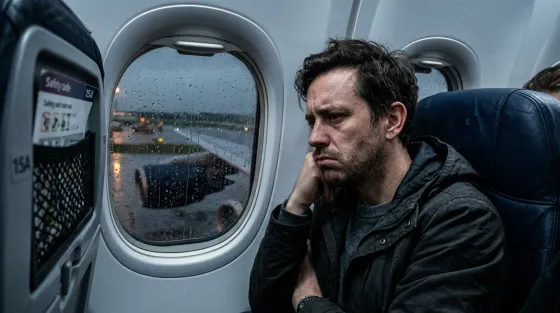
When Your Holiday Destination Becomes a Virtual Reality
There is nothing quite like the thrill of boarding a long-haul flight. You settle into your seat, crack open a lukewarm gin and tonic, and prepare to be transported to a sunny paradise. But imagine spending twelve hours in the sky only to find yourself back at Heathrow, having accomplished absolutely nothing. This isn't a plot from a low-budget sci-fi film; it is the current reality for thousands of British travellers caught in the crossfire of geopolitical instability in the Middle East.
The Phantom Flight Phenomenon
Recent escalations in the region have turned the skies into a logistical minefield. As airlines scramble to avoid active conflict zones, we are seeing an uptick in so-called phantom flights. Passengers on routes to destinations like Dubai are finding themselves mid-air, only for the captain to announce that the path ahead is no longer safe. The result? A six-thousand-mile round trip that ends exactly where it started.
Why Is This Happening?
It boils down to a simple, albeit frustrating, calculation: safety over schedules. When airspace closes due to missile activity or drone threats, pilots have to make split-second decisions. Rerouting is often impossible due to fuel constraints and the sheer speed at which the situation changes. While it is undeniably annoying to have your holiday plans scuppered by a twelve-hour U-turn, it is worth remembering that the alternative is flying directly into a war zone. I think we can all agree that a night in a hotel near the M25 is preferable to the hazards of an active conflict.
The Impact on Your Wallet
For the average Brit, these disruptions are more than just a nuisance; they are a financial headache. If you are stuck on a flight to nowhere, your rights depend heavily on the airline and the specific circumstances of the diversion. Generally, if a flight is cancelled or significantly delayed due to 'extraordinary circumstances' like war or civil unrest, you might not be entitled to the standard compensation under UK261 regulations. However, the airline is still obligated to provide food, water, and accommodation if you are stranded.
How to Protect Your Trip
- Check Your Travel Insurance: Make sure your policy covers 'disruption' and 'airspace closure'. Many standard policies are surprisingly thin in this area.
- Monitor Airline Updates: Don't rely on the departure board alone. Keep an eye on the airline's app for real-time notifications.
- Be Pragmatic: If the news is reporting major airspace closures, expect the worst and hope for the best. Sometimes, it is better to delay your departure voluntarily before you are already trapped in a metal tube over the Atlantic.
Ultimately, these phantom flights are a stark reminder of how fragile our global connectivity is. While we enjoy the luxury of jetting off at a moment's notice, we are also at the mercy of a world that is becoming increasingly volatile. Pack your patience, keep your expectations low, and maybe bring an extra book for the journey that might not actually happen.
Read the original article at source.
No comments yet. Be the first to share your thoughts.