T-Maxxing: Why Blokes Are Chasing Testosterone Like It's a High Score
The New Male Obsession You Didn't See Coming
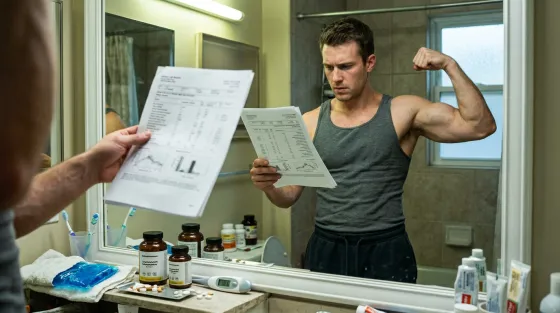
Somewhere between protein shakes and cold plunges, a new fixation has gripped the modern man: testosterone levels. Welcome to the world of 'T-maxxing', where men are treating their hormone panels like leaderboard rankings, swapping blood test results with the competitive fervour usually reserved for Fantasy Premier League.
Fuelled by manosphere influencers, podcast bros, and a booming telehealth industry, testosterone replacement therapy (TRT) has gone from a niche medical treatment to a lifestyle trend. And the numbers are staggering.
The Numbers Don't Lie (Even If Some Influencers Do)
TRT prescriptions in the US surged from 7.3 million in 2019 to over 11 million by 2024, with the sharpest rise among men aged 35 to 44, where prescriptions expanded nearly 60% in the last decade. Around 13.5% of men under 40 now report using testosterone supplementation, and nearly 40% have considered it.
The market reflects the mania. TRT is now a roughly $2 billion industry, projected to hit $2.5 to $3 billion by 2034. Online clinics have multiplied like rabbits: 223 were identified in 2023, with approximately 325 more opening since early 2024. Platforms like Hims and Ro have jumped in aggressively, sensing gold in the hormone rush.
Who's Selling the Dream?
Much of this is driven by social media, where testosterone promotion operates in a curious evidence-free zone. A University of Copenhagen and University of Sydney study found that 0% of 46 analysed testosterone-promoting posts cited any scientific evidence whatsoever. Even better: 72% of those accounts had direct financial ties to the products they were flogging.
The usual suspects are involved. Joe Rogan, Andrew Huberman, and a legion of shirtless TikTok influencers have normalised the idea that optimising your testosterone is as routine as taking a multivitamin. The term 'T-maxxing' has become the rallying cry, particularly among teenage boys on TikTok, which is frankly concerning.
The Bit They Don't Mention in the Reels
Here's where it gets properly worrying. TRT carries real risks that rarely make it into a 60-second clip:
- Fertility: 65% of men on TRT become sterile within four months. Recovery typically takes 12 to 24 months, and it's not guaranteed.
- Cardiovascular concerns: A UCLA study found heart attack risk more than doubled in men over 65 within 90 days of starting TRT, and nearly tripled in younger men with existing heart conditions.
- Prescribing standards are patchy: Up to 25% of TRT patients never have their testosterone tested before treatment. A 2022 undercover study found six out of seven private clinics offered TRT to an unsuitable candidate.
The FDA did remove its black box cardiovascular warning in February 2025, following the TRAVERSE trial of over 5,000 men aged 45 to 80 showing no increased risk at therapeutic doses. But that trial studied older men at recommended levels. Most safety research simply hasn't been done on younger men, and certainly not at the supraphysiological doses some are chasing.
Is There Actually a Problem to Solve?
There's a kernel of truth buried in the noise. Population-level testosterone has been declining across generations, likely due to rising obesity rates, endocrine-disrupting chemicals, and lifestyle changes. Testosterone naturally drops about 1 to 2% per year after age 30 to 40. Clinical hypogonadism, the actual medical condition, affects roughly 1 in 200 men, with deficiency generally defined as levels below 300 ng/dL.
For those men, TRT can be genuinely life-changing. The problem isn't the treatment itself; it's the wholesale rebranding of a medical intervention as a lifestyle hack for anyone who fancies feeling a bit more 'alpha'.
A UK Perspective
Over here, testosterone requires a prescription, and NHS guidelines remain considerably more conservative than the American telehealth free-for-all. That said, we're not immune. Private clinics in the UK have shown the same willingness to prescribe inappropriately, and the social media pipeline is entirely borderless. British lads are watching the same TikToks and listening to the same podcasts.
The Verdict
If you genuinely suspect low testosterone is affecting your quality of life, see your GP and get properly tested. That's sensible healthcare. What isn't sensible is treating your endocrine system like a video game stat to be min-maxed because a bloke with a ring light told you to. The influencers have financial incentives. Your hormones don't care about their conversion rates.
Read the original article at source.





No comments yet. Be the first to share your thoughts.