Paris Goes to the Polls: Can the Socialists Cling On in Tomorrow's Mayoral Showdown?
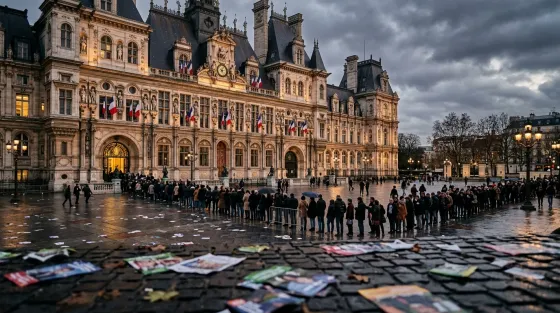
The Battle for the City of Light
Tomorrow, Parisians head back to the ballot box for what promises to be one of the most closely watched mayoral runoffs in recent French history. The Socialists, who have held the capital since 2001, are fighting to keep their grip on the Hotel de Ville. And while their candidate topped the first round convincingly, the path to victory is far from straightforward.
Emmanuel Gregoire, the former first deputy to outgoing mayor Anne Hidalgo (who wisely decided not to seek a third term), led the pack on 15 March with approximately 38% of the vote. Rachida Dati, the conservative challenger backed by Les Republicains and a former Minister of Culture, trailed at roughly 25.5%. On paper, that looks comfortable. In practice, French municipal politics rarely plays out on paper.
Five Into One Does Not Go
Here is where it gets interesting. Five candidates cleared the 10% threshold needed to advance to the second round, meaning tomorrow's vote is a proper free-for-all. Alongside Gregoire and Dati, voters will choose between Sophia Chikirou of La France Insoumise (the hard left), centrist Pierre-Emmanuel Bournazel, and Sarah Knafo of the far-right Reconquete party.
The left vote is notably split. Chikirou has refused to merge her list with Gregoire's coalition of Socialists, Greens, and Communists, which could prove costly. Meanwhile, right-wing and centrist camps have been exploring their own mergers to consolidate the anti-left vote. If those talks bore fruit, Gregoire's 12-point first-round lead could shrink considerably.
All 163 seats on the Council of Paris are up for grabs, and a new electoral reform introduced in August 2025 has changed the voting system for Paris, Lyon, and Marseille, adding a second ballot to the mix. Because French elections were apparently not complicated enough already.
The National Picture: Far-Right Surge, Turnout Slump
Paris is grabbing the headlines, but the broader national story from these municipal elections is equally striking. Across roughly 35,000 municipalities, the far-right made dramatic gains. Over 500 Rassemblement National lists surpassed the 10% threshold nationally, roughly double the figure from 2020. The RN and its allies finished first in at least 75 communes, compared to a mere 11 last time around.
Their strongest showings came in smaller towns under 10,000 residents, while larger cities proved tougher ground. In Marseille, the race is a nail-biter: incumbent left-wing mayor Benoit Payan took 36.7% in the first round, with RN candidate Franck Allisio breathing down his neck at 35%.
Not everything was dramatic. Former Prime Minister Edouard Philippe strolled to a comfortable 43% in Le Havre in the first round, proving that name recognition still counts for something in French local politics.
Perhaps the most telling statistic of all: voter turnout was just 57% nationally, the second-lowest in Fifth Republic history. Nearly half of France's 48.7 million registered voters simply could not be bothered. One suspects they will have opinions about the results regardless.
Why This Matters Beyond France
These municipal elections are not happening in a vacuum. The 2027 French presidential election looms large, and several candidates are clearly using these local races as springboards for bigger ambitions. The far-right's continued growth in grassroots politics should concern centrists and progressives across Europe, while the left's ability (or inability) to unite will be scrutinised well beyond French borders.
For Paris specifically, the question is simple: can Gregoire hold the line, or will a fragmented left and a consolidating right hand the keys to the city's future to someone else entirely? We will know by tomorrow evening.
Read the original article at source.




No comments yet. Be the first to share your thoughts.