The Price Tag Nobody Wanted: Iranian Strikes on US Bases Rack Up Staggering Damage
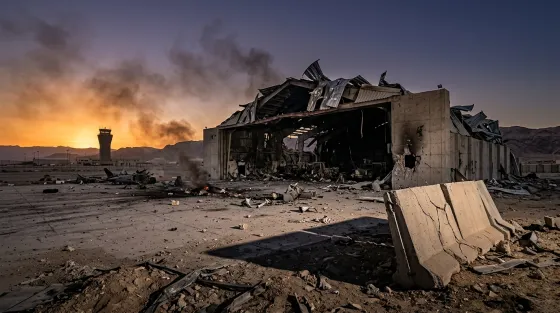
When the BBC reported that Iranian strikes on bases used by the US caused $800 million in damage, you might have assumed that sounded like quite the bill. As it turns out, that figure may actually be the conservative end of the spectrum.
What Happened
Following the launch of Operation Epic Fury on 28 February 2026, a joint US-Israeli operation targeting Iran, Tehran hit back with retaliatory strikes across the region. And by "across the region," we mean at least nine countries and 17 confirmed sites. That is not a typo. Nine countries.
The specific $800 million figure cited by the BBC could not be independently verified against its original methodology, but broader analyses suggest it likely refers to a single base or a narrow timeframe, because the wider picture is considerably more expensive.
A Very Costly Shopping List
Let us start small (relatively speaking). The Pentagon assessed damage at the US 5th Fleet headquarters in Bahrain at roughly $200 million. Satellite imagery confirmed the destruction of several large buildings and two satellite communications terminals worth around $20 million. That was just one location.
At Al Udeid Air Base in Qatar, an AN/FPS-132 early warning radar valued at $1.1 billion was struck. One single piece of equipment, worth more than a Premier League club's annual wage bill. The hit was confirmed by satellite imagery and the Qatari government.
Then there are the THAAD missile defence radars. CNN's satellite investigation confirmed AN/TPY-2 units were hit in Jordan, the UAE, and Saudi Arabia. Each carries a price tag somewhere between $500 million and $800 million depending on the source. Multiple were destroyed.
Eleven MQ-9 Reaper drones were lost at $30 million each, totalling $330 million. Three F-15E Strike Eagles worth a combined $282 million were also destroyed, though it is worth noting these were lost to friendly fire from Kuwaiti air defences, not Iranian strikes. All six aircrew survived.
The Bigger Bill
Open-source intelligence analysis compiled by Anadolu Agency estimated roughly $2 billion in US equipment losses within just the first four days. By the two-week mark, that figure had reportedly reached approximately $3.84 billion. The Center for Strategic and International Studies (CSIS) placed their estimate at $1.7 billion through day six, noting that information remained "highly limited" and actual costs could be higher still.
So wherever the final number lands, the $800 million headline starts to look less like the total and more like a down payment.
The Human Cost
Hardware is replaceable. People are not. CENTCOM confirmed 13 US service members were killed: six Army reservists in a drone attack at Port Shuaiba, Kuwait, six crew aboard a KC-135 Stratotanker that crashed in western Iraq, and one additional fatality. Approximately 140 personnel were wounded, with eight sustaining serious injuries.
Why This Matters
For anyone watching defence spending from a UK perspective, the scale here is sobering. Replacing billion-dollar radar systems and rebuilding installations across nine countries is neither quick nor cheap, and it arrives at a time when Western defence budgets are already under significant pressure.
Precise totals will likely shift as more satellite data becomes available and official assessments work through the system. But even the most conservative reading suggests this has been one of the costliest episodes for US military infrastructure in the Middle East in decades. Whatever your view on the politics, the financial reality is hard to argue with.
Read the original article at source.




No comments yet. Be the first to share your thoughts.