One Medal and a Dream: Is Team GB’s Winter Paralympic Optimism Just Blind Faith?
The Great British Glass Half Full
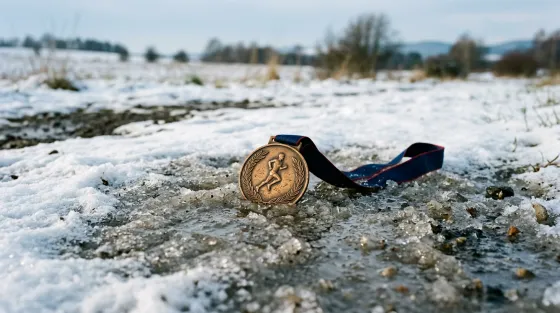
There is something quintessentially British about looking at a solitary bronze medal and declaring it a roaring success for the future. After the dust, or rather the slush, settled on the most recent Winter Paralympics, Great Britain returned home with exactly one piece of silverware. In any other context, this might be viewed as a bit of a disaster, yet the official line from the camp is one of overwhelming positivity. It is the kind of stoic optimism usually reserved for people waiting for a bus in the pouring rain or those of us who still believe the England football team will comfortably win a penalty shootout.
We need to talk about the reality of the situation before we get swept up in the PR spin. One medal is a significant drop from previous outings. At PyeongChang in 2018, the team brought home seven medals. In Sochi 2014, it was six. To go from a consistent haul to a single bronze feels like a bit of a slip on the ice, yet the leadership team is adamant that we should be excited for what is to come. Is this genuine insight into a burgeoning talent pool, or is it just the sporting equivalent of saying the dog ate the homework?
The Hero of the Hour: Neil Simpson
Let us give credit where it is absolutely due. The single medal came courtesy of Neil Simpson and his guide, Andrew Simpson. They secured a bronze in the men’s visually impaired slalom, providing the one shining light in an otherwise frustrating campaign for the British squad. To compete at this level is an incredible feat of athleticism and nerve, especially when you consider that the British winter sports programme does not exactly have the luxury of the Alps in its backyard.
The Simpson brothers have shown that the talent is there. Their performance was a masterclass in technical skill and communication. However, relying on a single source of success is a risky strategy for any national governing body. When the margin for error is as thin as a ski blade, putting all your eggs in one basket often leads to a very expensive omelette. The pressure on these athletes is immense, particularly when the funding models used by UK Sport are so heavily tied to podium finishes.
The Economics of Sliding Down Hills
In the current UK economy, every penny of public and National Lottery funding is under the microscope. We are not a nation that naturally produces winter sports champions. We are a nation that produces people who get excited when it snows for twenty minutes and then immediately complain when the trains stop running. To train a Winter Paralympian requires significant investment, often involving long stints abroad in countries that actually have mountains and reliable weather.
When the results do not mirror the investment, the questions start to get a bit pointed. Why are we spending millions on sports where we are struggling to break into the top ten? The counter-argument, and the one the team is currently leaning on, is that the 'near misses' tell a different story. They point to a string of fourth and fifth-place finishes as evidence that the squad is competitive, even if they are not currently standing on the podium. It is a fair point, but in the world of high-performance sport, nobody remembers who came fourth. Just ask any politician who finished as the runner-up in a leadership contest.
The Competition is Getting Tougher
We also have to acknowledge that the rest of the world is not standing still. The level of competition in para-winter sports has skyrocketed. Nations like China have invested gargantuan sums into their programmes, moving from zero medals to topping the table in a remarkably short span of time. For a nation like Great Britain to compete, we cannot just rely on grit and the occasional dry ski slope in Edinburgh. We need a structural rethink of how we identify and support talent at the grassroots level.
The 'positivity' mentioned by the team leadership likely stems from the fact that many of the athletes in this cycle were relatively inexperienced. They were blooded in a high-pressure environment with the hope that they will peak in four years' time. It is a long-term play, but it requires the public and the funders to have a lot of patience. In an era of instant gratification, asking people to wait until 2026 for a return on investment is a tough sell.
Looking Ahead to Milan-Cortina 2026
The road to the 2026 Games in Milan-Cortina starts now. If the British team is truly 'positive' about the future, we should expect to see a significant step up in the intervening years. The 'near misses' need to turn into 'narrow wins'. The young athletes who gained experience this time around need to become the seasoned veterans who can handle the pressure of a final run.
"We have a group of athletes who have shown they can compete with the best in the world. The results didn't go our way this time, but the foundation is there for future success."
That is the unofficial mantra. It is a brave stance to take when the medal table suggests otherwise. However, sport is rarely a straight line. It is full of peaks and troughs, much like the mountains our athletes compete on. If the lessons from this Games are truly learned, then perhaps this single bronze medal will be seen as the catalyst for a more robust and successful era of British winter para-sport.
The Final Verdict
Is the optimism justified? It depends on your perspective. If you are a pragmatist who looks only at the numbers, then one medal is a failure. If you are a romantic who believes in the journey and the development of young talent, then there is plenty to be hopeful about. For the average British sports fan, the truth probably lies somewhere in the middle. We want to see our athletes succeed, but we also want to see a clear plan for how we get back to the heights of 2018.
The UK economy demands results, and the athletes deserve the best possible support. Let us hope that by the time Milan-Cortina rolls around, we are talking about a golden generation rather than just a single, lonely bronze. Until then, we will keep the kettle on and remain cautiously, stubbornly, and Britishly optimistic.
Read the original article at source.



No comments yet. Be the first to share your thoughts.