British Journalist Has Terrifyingly Close Call as Missile Lands Just Yards Away During Live Report from Lebanon
When 'Too Close for Comfort' Doesn't Even Begin to Cover It
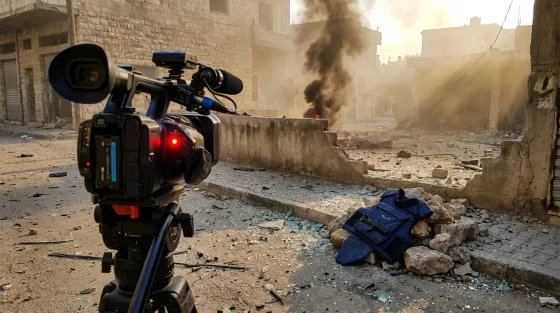
There are bad days at the office, and then there is having a missile slam into the ground mere yards from where you are standing, mid-sentence, on a live broadcast. British journalist Steve Sweeney experienced exactly that while reporting from Lebanon, in footage that serves as a stark and visceral reminder of the dangers faced by correspondents working in conflict zones.
The video, which has since circulated widely online, shows Sweeney delivering a piece to camera when a detonation erupts alarmingly close to his position. The blast is sudden, violent, and far too near for anyone's liking. To his credit, Sweeney maintained a composure that most of us could only dream of mustering if a pigeon flew too close to our heads, let alone an actual missile.
What Happened on the Ground
Details surrounding the incident point to the ongoing and intensifying conflict in Lebanon, where civilian areas and infrastructure have been repeatedly targeted. Sweeney was reporting live when the strike occurred, with the impact landing just a few feet from his location. The footage captures the raw, unfiltered reality of what journalists on the ground contend with daily.
It is worth pausing on that for a moment. A few feet. Not a few hundred metres. Not somewhere vaguely in the distance. A few feet. That is the length of a modest kitchen table. The margin between a dramatic news clip and a tragedy was, quite literally, negligible.
The Risks Journalists Face in Conflict Zones
This incident throws a spotlight on something that rarely gets the attention it deserves: the extraordinary personal risk that conflict journalists accept as part of the job. While most of us consume war coverage from the safety of our sofas, the people bringing us those images and reports are putting themselves directly in harm's way.
Lebanon has become an increasingly dangerous environment for media workers in recent months. The escalation of hostilities has made reporting from the region a genuinely perilous undertaking. Press vests and helmets offer a degree of protection, but as this footage makes abundantly clear, they offer precisely zero defence against a missile landing on your doorstep.
According to various press freedom organisations, the number of journalists killed or injured in conflict zones globally has been rising. The Committee to Protect Journalists and Reporters Without Borders have both repeatedly called for greater protections for media workers operating in active warzones. Incidents like this one underscore why those calls are not just worthy but urgent.
Why This Matters Beyond the Headlines
It is easy to watch a clip like this, feel a momentary jolt of shock, and then scroll on to the next thing. But the broader implications are significant. When it becomes too dangerous for journalists to operate in a conflict zone, the flow of independent, verified information dries up. And when that happens, the people suffering most in these conflicts lose their voice entirely.
Free and fearless reporting from warzones is not a luxury. It is a necessity. It holds belligerents to account, documents potential war crimes, and ensures the international community cannot simply look the other way. Every journalist who is forced to withdraw because the risks have become untenable represents a gap in the public's right to know what is happening.
Steve Sweeney's close call is not just a dramatic piece of footage. It is a data point in a deeply troubling trend.
The Human Element
What strikes you most when watching the video is not the explosion itself, dramatic as it is. It is the reaction afterwards. The momentary processing. The split second where training and instinct collide and a person has to decide whether to run, drop, or keep talking. Sweeney, to his considerable credit, handled the situation with a professionalism that speaks to years of experience in difficult environments.
But professionalism should not be mistaken for invulnerability. These are people, not action heroes. They have families, friends, and lives beyond the lens. The psychological toll of repeated exposure to this kind of danger is well documented, with PTSD and trauma-related conditions affecting a significant proportion of conflict correspondents.
Looking Ahead
As the situation in Lebanon continues to develop, the need for on-the-ground reporting remains critical. But so does the need for meaningful protections for those doing the reporting. International humanitarian law is clear on the protection of journalists in conflict, yet enforcement remains woefully inadequate.
For now, footage like Sweeney's serves a dual purpose. It brings the reality of conflict into sharp, undeniable focus for audiences thousands of miles away. And it reminds us that the news does not just appear on our screens by magic. Someone has to be there, standing in the dust and the danger, to bring it to us.
The least we can do is pay attention.
Read the original article at source.

No comments yet. Be the first to share your thoughts.